The first steps in Luni are not only about giving the player somewhere to start. The opening area is also the first place where the player begins to understand how the world works. For Luni, that place is the Forest of the Initiate. I wanted the beginning to feel calm and easy to read, while still giving the player reasons to explore, interact with the environment and gradually discover some of the game's basic concepts without turning the opening into a long sequence of tutorials.
Game Design #1: Designing the First Steps in Luni
Designing the first steps in Luni means introducing exploration, interactions and visual cues naturally, while keeping the opening area simple and easy to read.
By Andrei Alexandru4 min read
Building the terrain
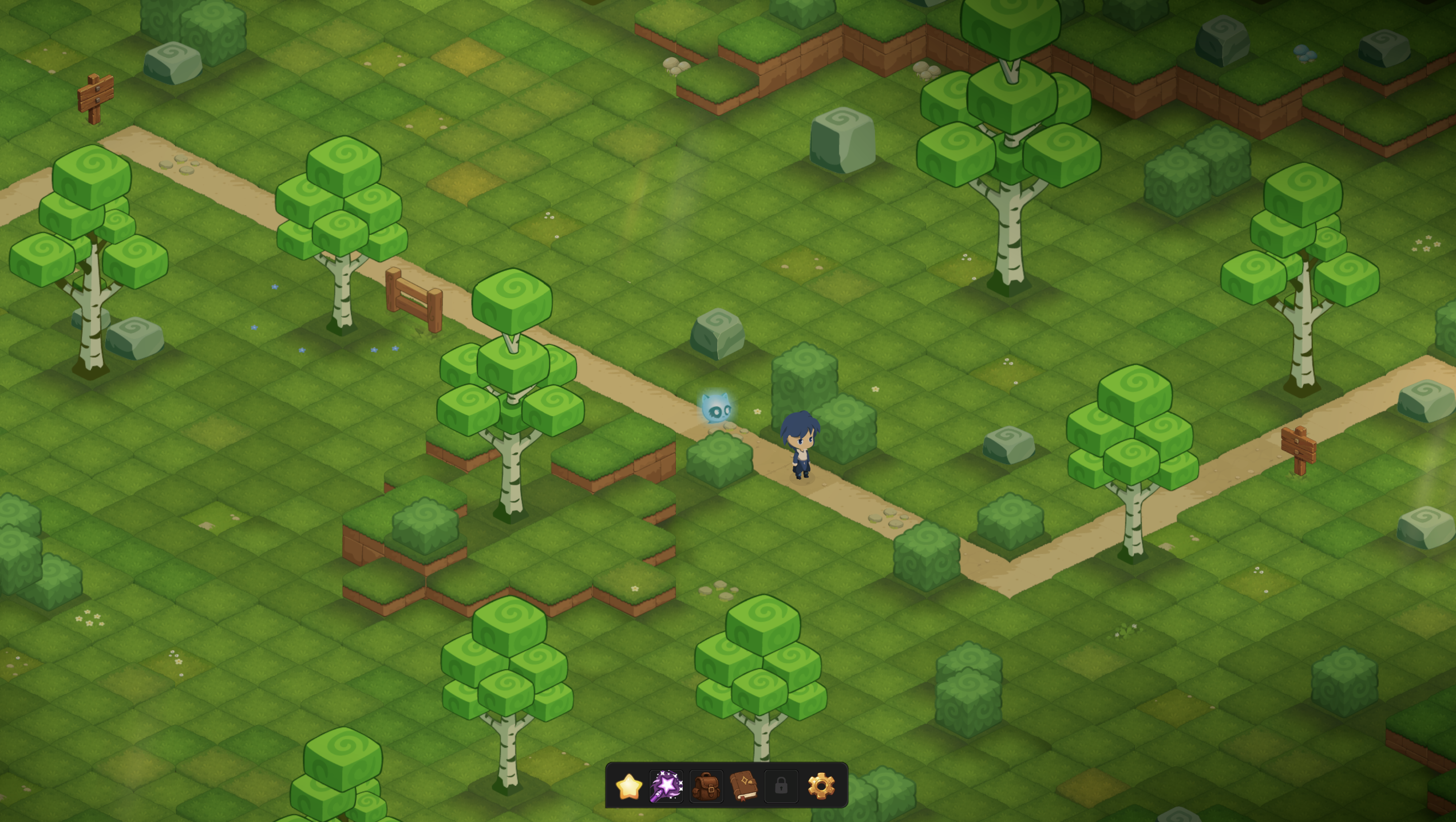
The terrain in Luni is built in Unity using isometric tiles. The world follows a 2:1 isometric projection, and I have created tile variations that can be combined at different heights to build more complex environments later in the game. For the first map, however, traversal intentionally stays on a single level. I wanted the player to understand the space immediately, without introducing more complex elevation changes right at the beginning. The ground itself is still not completely uniform. Some grass tiles sit slightly higher or lower than others, which is intentional and helps break up large surfaces that would otherwise feel too flat or repetitive. These variations are mainly visual here, while later areas can make greater use of different terrain heights. Paths, vegetation, rocks and other landmarks then help structure the map further and make navigation readable without constantly relying on interface markers.
Giving the player reasons to explore
I don't want exploration in Luni to exist only between objectives. Even in the first area, there are already small things that reward the player for looking around instead of simply following the main path. Some rewards are visible, while others are deliberately less obvious. There is a hidden chest somewhere in this first map, for example, but I would rather leave its location for players to discover. I like the idea that occasionally checking an unusual corner, noticing a small detail or interacting with something that looks interesting can lead to a surprise. These discoveries are meant to complement the more direct rewards and objectives in the game.
Introducing the basic concepts
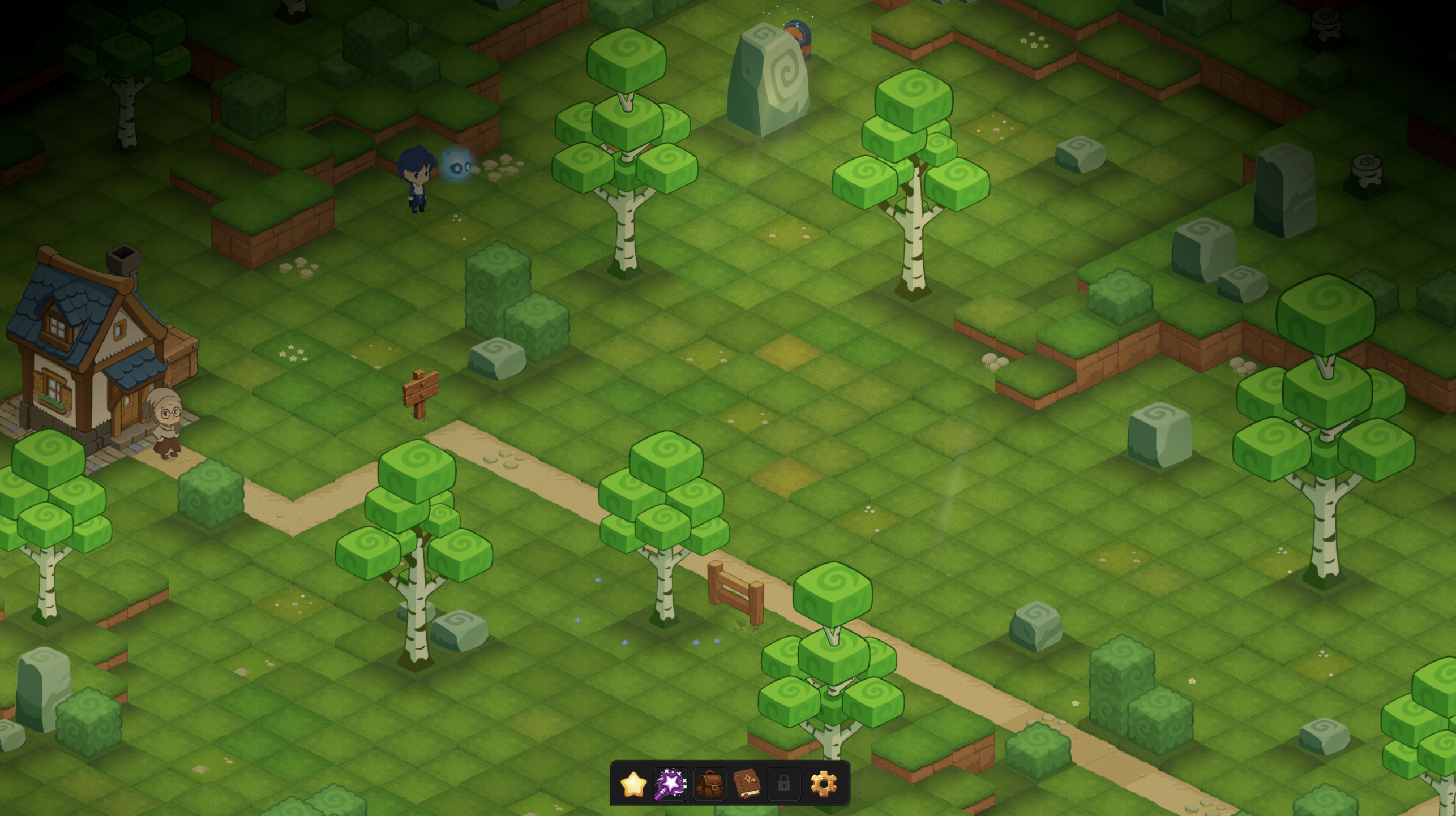
The Forest of the Initiate also serves as the first introduction to some of Luni's basic concepts. Rather than explaining everything through separate tutorial screens, many of these ideas are introduced through conversations between Orin and the characters he meets. The player can gradually learn more about the world, its interactions and some of the systems around them while continuing to explore. Grandma Tzibla is one example of this approach. Talking to her restores the player's health, so the interaction has a practical purpose in addition to dialogue. It also introduces an idea I want to use throughout the game: characters are not necessarily there only to deliver dialogue or quests, and some of them may also have a direct function in the world.
Creating a visual language for interactions
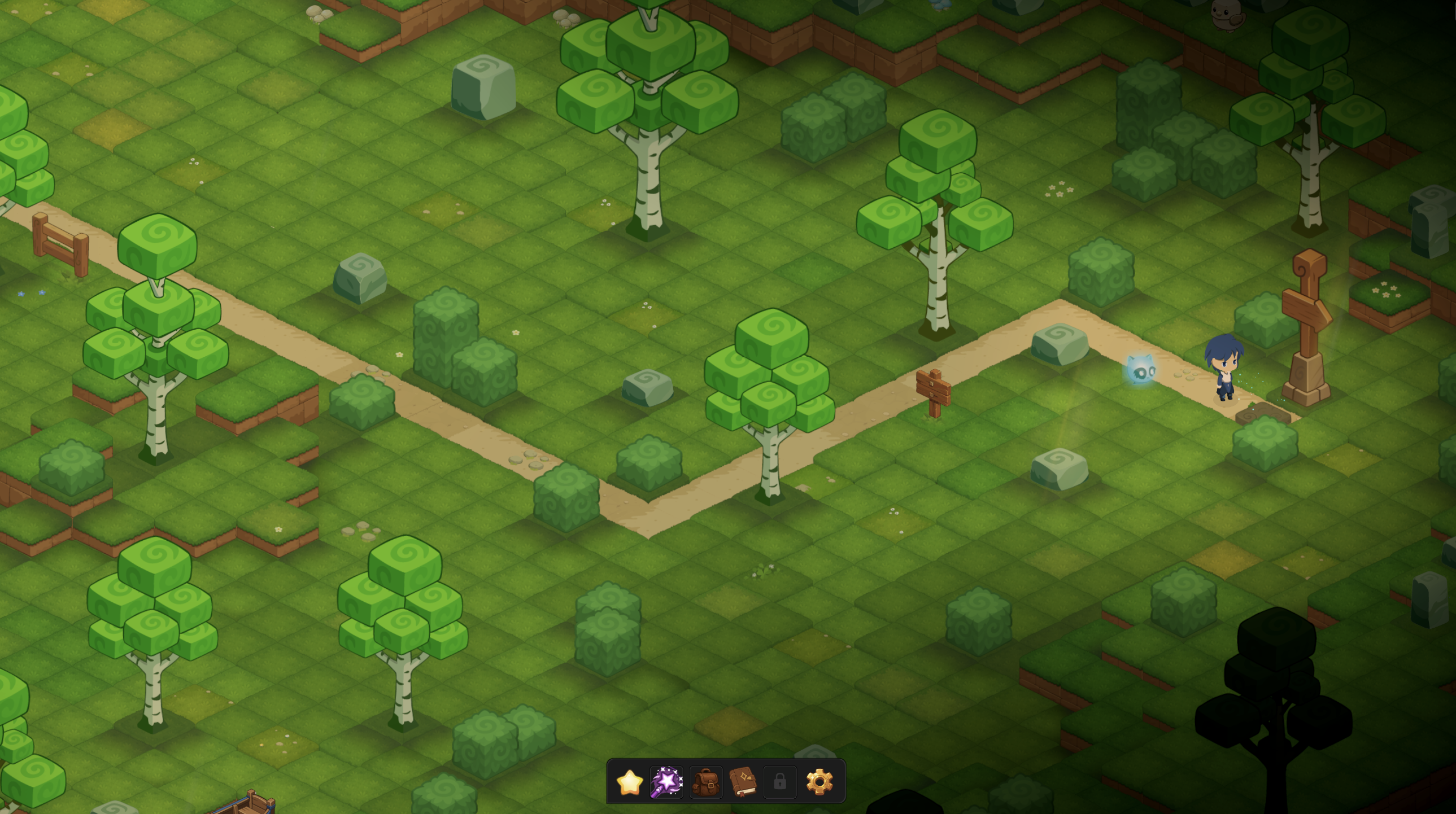
Transitions between maps are introduced visually as well. A wooden signpost helps indicate that a path continues towards another area, while a nearby stone surrounded by small fireflies marks the actual transition point the player can walk into. The fireflies are also something I am considering using as a recurring visual cue for certain interactive elements throughout the game. They would not necessarily appear on everything the player can interact with, especially characters, but they could help highlight particular objects, buildings or points of interest. The idea is to gradually create a visual language that the player can recognize without needing an interface marker every time. I still want to use this selectively, because if every interactive object had the same effect, it would quickly stop being useful and could make exploration too obvious.
Keeping the first steps in Luni readable
One of the things I want to avoid at the beginning of Luni is introducing every system at once. There will be more mechanics, more complex environments and more things for the player to learn later, but the first area does not need to demonstrate the entire game. Instead, it can establish a few simple ideas: explore, pay attention to the environment, interact with things that seem useful or unusual, and begin learning how the world communicates with you. The exploration music for this area is already composed as well, helping give the Forest of the Initiate its own atmosphere without changing the deliberately simple pace of the opening. The first area is now getting close to the version I had in mind for the beginning of the game. There are still details to refine, but the overall structure, atmosphere and main interactions are largely in place. It is only the first small part of Luni's world, and I still want most of what comes after it to remain a surprise.