Luni
Devlog

DevBlog #3: Exploring the world of Luni

An overview of Luni’s isometric fantasy RPG world: forest exploration, characters, quests, talking golem caves and the growing town of Bran.

By Andrei5 min read
DevBlog #3: Exploring the world of Luni

Recent articles have covered Luni’s 2D isometric world, dialogue, cutscenes, quests and the paths between maps. Now I’d like to bring them together and discuss their role in Orin’s adventure. Luni is an isometric fantasy RPG with exploration, companions and turn-based battles. The Forest of the Initiate and the town of Bran are the places shown so far, where movement, conversations, discoveries and progression come together in the game.

Exploration in an isometric fantasy RPG

Orin’s journey begins in the Forest of the Initiate. Through conversations and encounters along the way, the player gradually discovers how to move around, find treasure or spot an orb. Characters explain different interactions as Orin travels from one map to the next. This also connects to the story: Orin has amnesia. There is a story reason for his memory loss, and it also gives me a natural way to introduce explanations through the characters. Orin and the player discover the game’s mechanics together.

On the first map, Grandma Tzibla offers practical help: Orin can return to her to recover quickly. This gives beginners some support while they are still learning and experimenting. Further along, the encounters bring other perspectives on the world: a companion who knows the way, a scholar and a mysterious Hero met on the road. Each has a role in the journey and can reveal something through what they say or do.

In Luni, “Hero” is also a title with a specific meaning. It is awarded to soldiers who have performed an exceptional deed in battle and earned the king’s trust, receiving authority from him. It is one of the details of the story that the player will discover through encounters along the way.
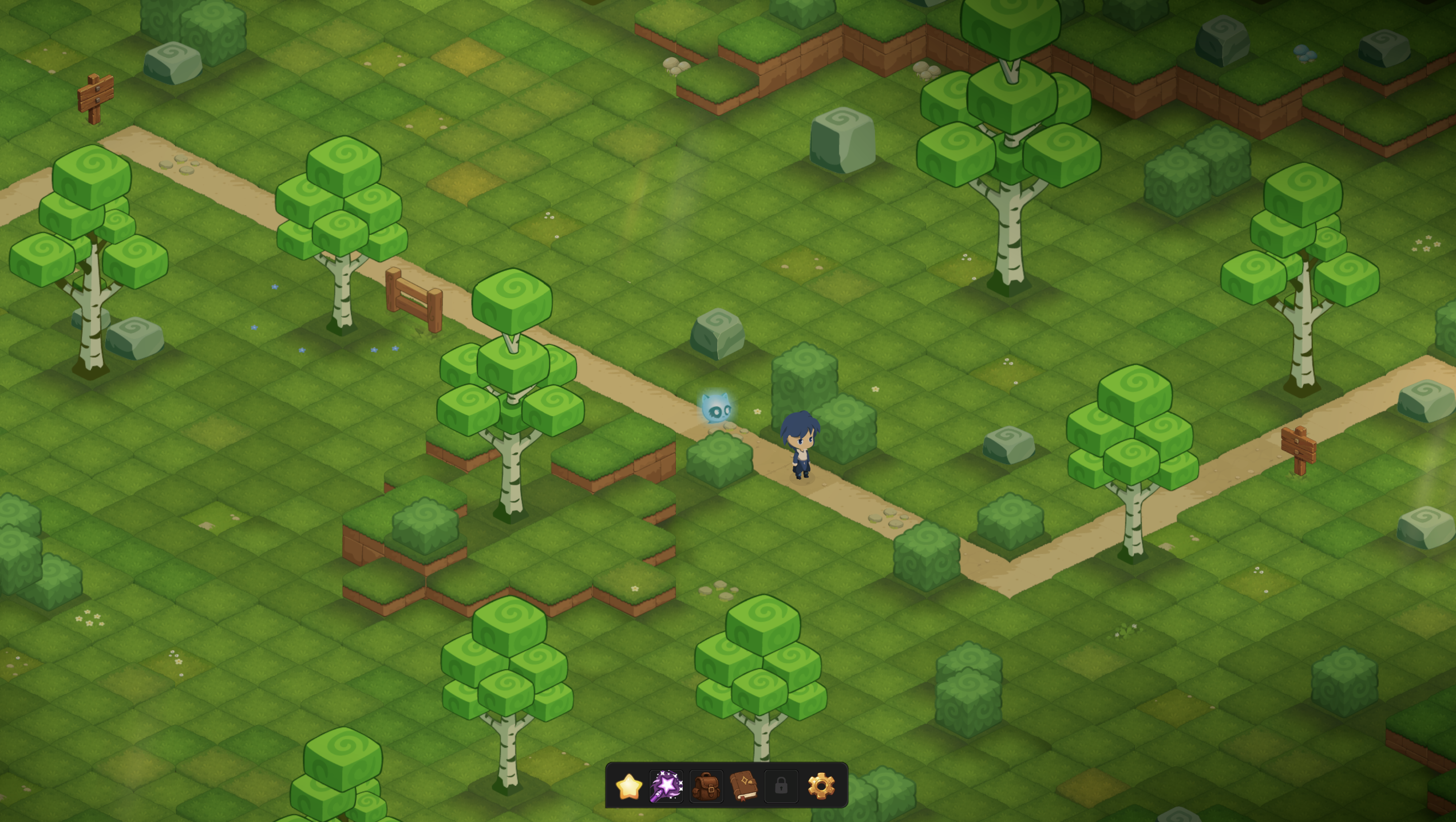
Orin and his glowing blue wisp explore the Forest of the Initiate in Luni. Winding dirt paths cross grassy isometric terrain among trees, bushes and rocks.
The Forest of the Initiate

Learning the route with Cori’Nuca

The forest paths wind between trees, streams, rocks and ground at different heights. To continue from one area to another, Orin uses the glowing stones that connect Luni’s maps. A signpost points towards the exit, and the stone marks the place he needs to step onto to reach the next map. These landmarks appear along the route so that the player can learn to recognise and use them with increasing confidence.

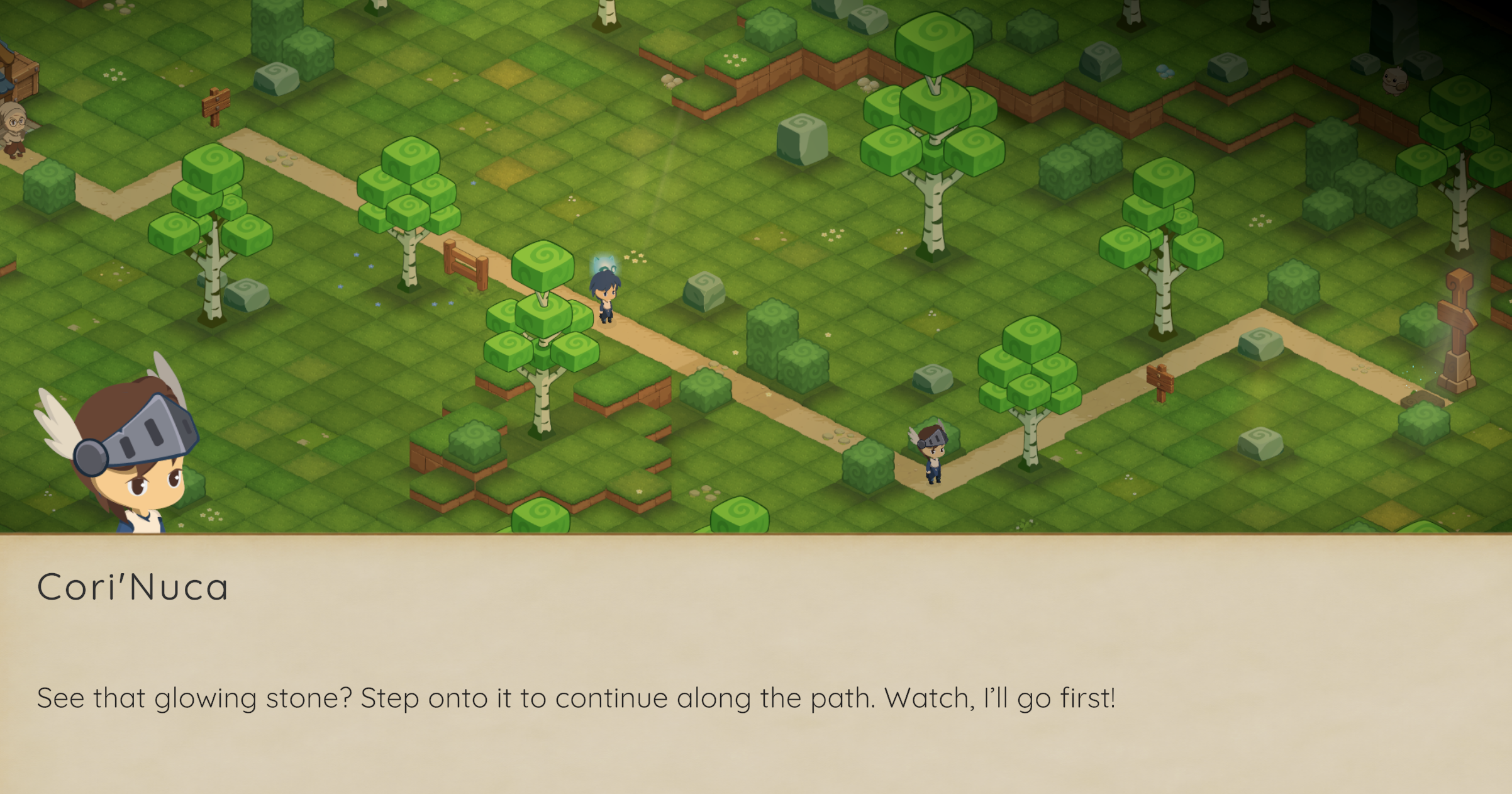
The dialogue and map transitions are ready for this introductory part of the adventure. Cori’Nuca shows Orin a glowing stone, explains what to do and goes first. The camera follows him until he steps onto the stone and disappears; the player can then follow. It is one of the ways I use dialogue and cutscenes to introduce interactions through the characters’ actions.

Cori’Nuca speaks to Orin on a forest path in Luni. His portrait appears beside the dialogue: “See that glowing stone? Step onto it to continue along the path. Watch, I’ll go first!” A sparkling passage stone and a wooden signpost are visible ahead.
Cori’Nuca shows Orin the way to the next map

A talking golem cave along the way

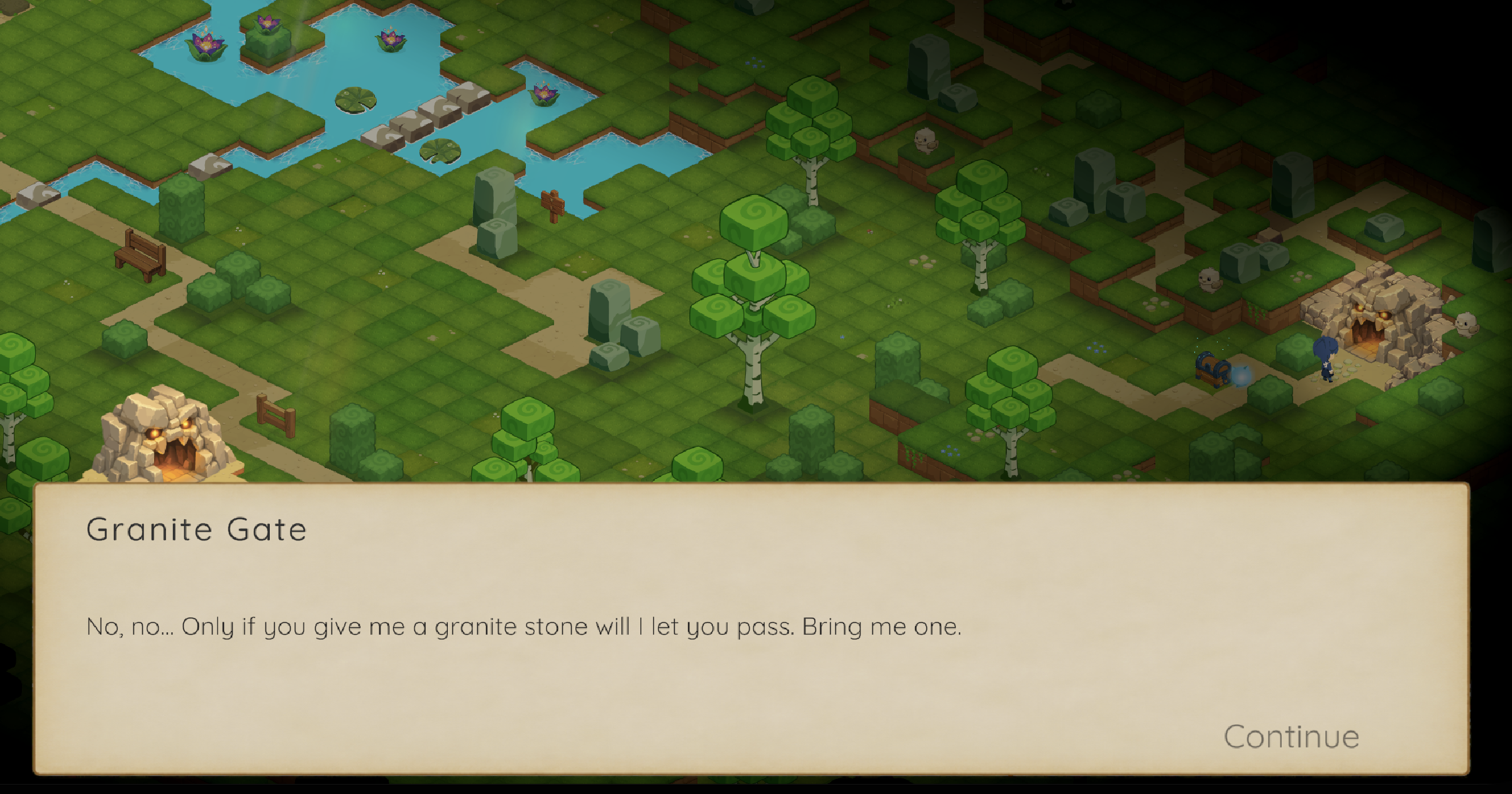
The road to Bran also hides one of the golem caves. Its entrance is shaped like a stone face and can speak to Orin, asking for something before letting him pass. I like encounters like this, where a piece of the scenery gains a personality and gives the player a reason to search, explore and return.

Orin and his glowing blue wisp stand near the Granite Gate in Luni’s forest. The cave entrance is shaped like a stone face with glowing eyes, beside a treasure chest and winding paths.
A golem cave on the road to Bran

Bran, the explorers’ town

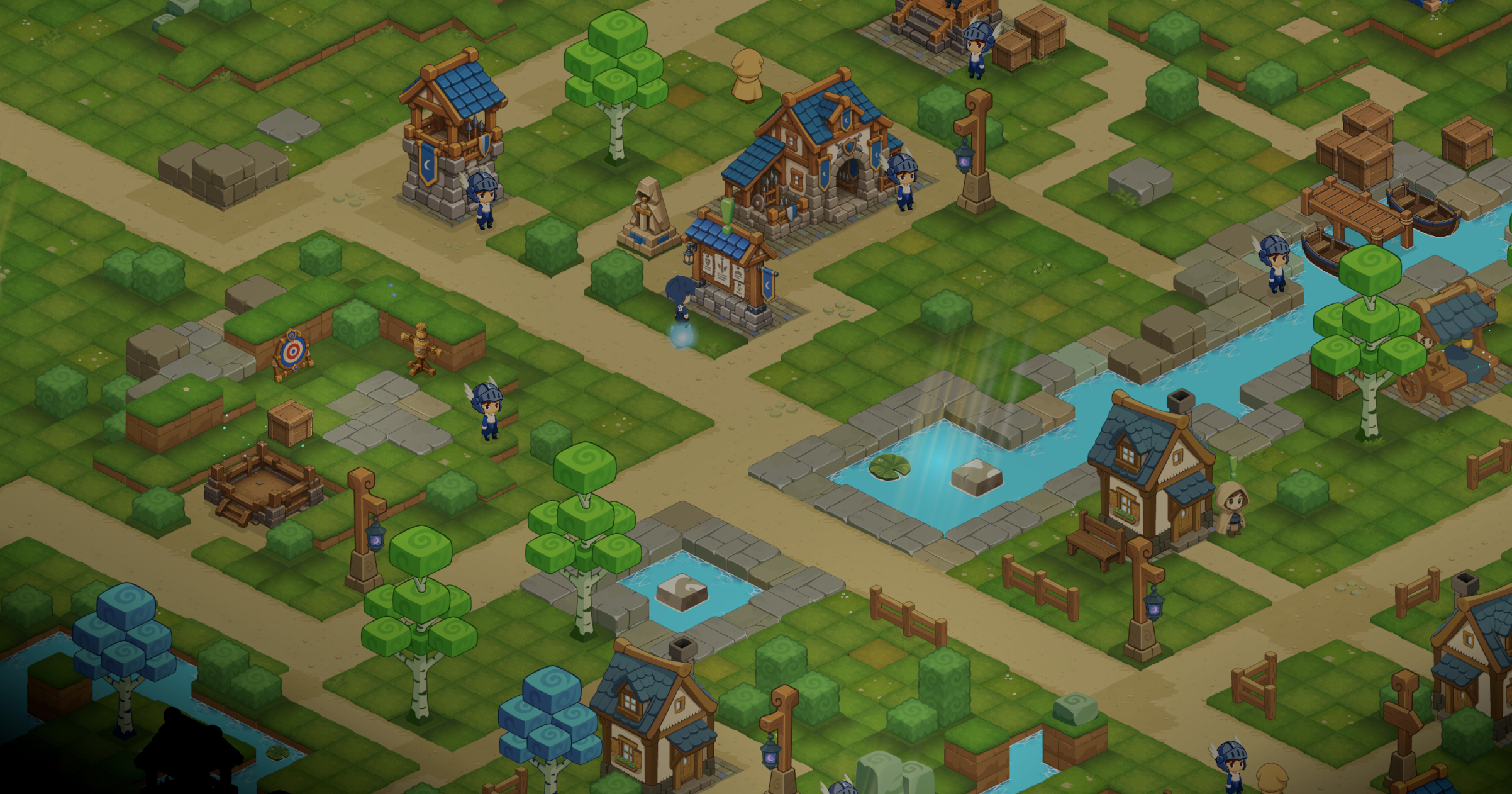
Bran is the central town in the story, where explorers gather. It lies close to the frontier of the continent’s explored lands. By the time Orin arrives, the exploration season is already well underway: expeditions have taken place and new regions have been discovered, pushing the known frontier beyond the town. The time to withdraw is approaching.

Bran’s different districts contain the shop, workshop, forge, temple, portal and observatory. Together with the quest board and battle obelisk, these places bring together an important part of the game’s mechanics: crafting, equipment upgrades, quests and battles. Between them are homes, inhabitants and their stories, which can give Orin reasons to set out again.

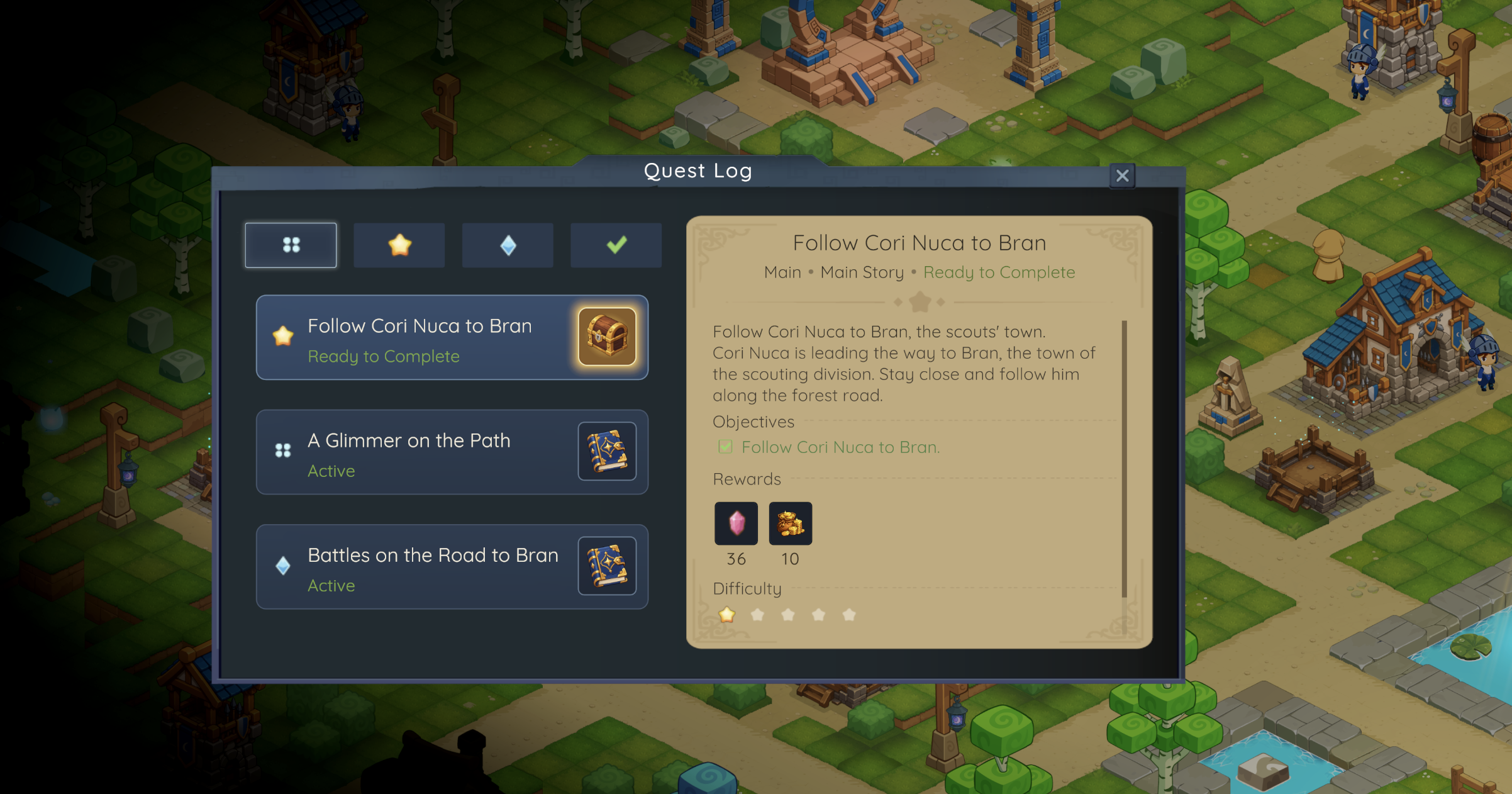
Mitzu’Lika, for example, is worried about her husband, Alandu, who has left for the forest with his pack on his back. Orin can agree to look for him and discover why he left. Other requests start with everyday needs, such as preparing something for winter or bringing in supplies. Luni’s quests connect the inhabitants’ concerns with exploration of the surrounding areas, while the quest log keeps track of objectives, rewards and useful hints.

Luni’s quest log shows “Follow Cori Nuca to Bran” marked “Ready to Complete”, with a checked objective, a glowing chest icon, reward icons and difficulty stars. The town of Bran is visible behind the panel.
Objectives, progression and rewards in the quest log

Town upgrades and crafting in Bran

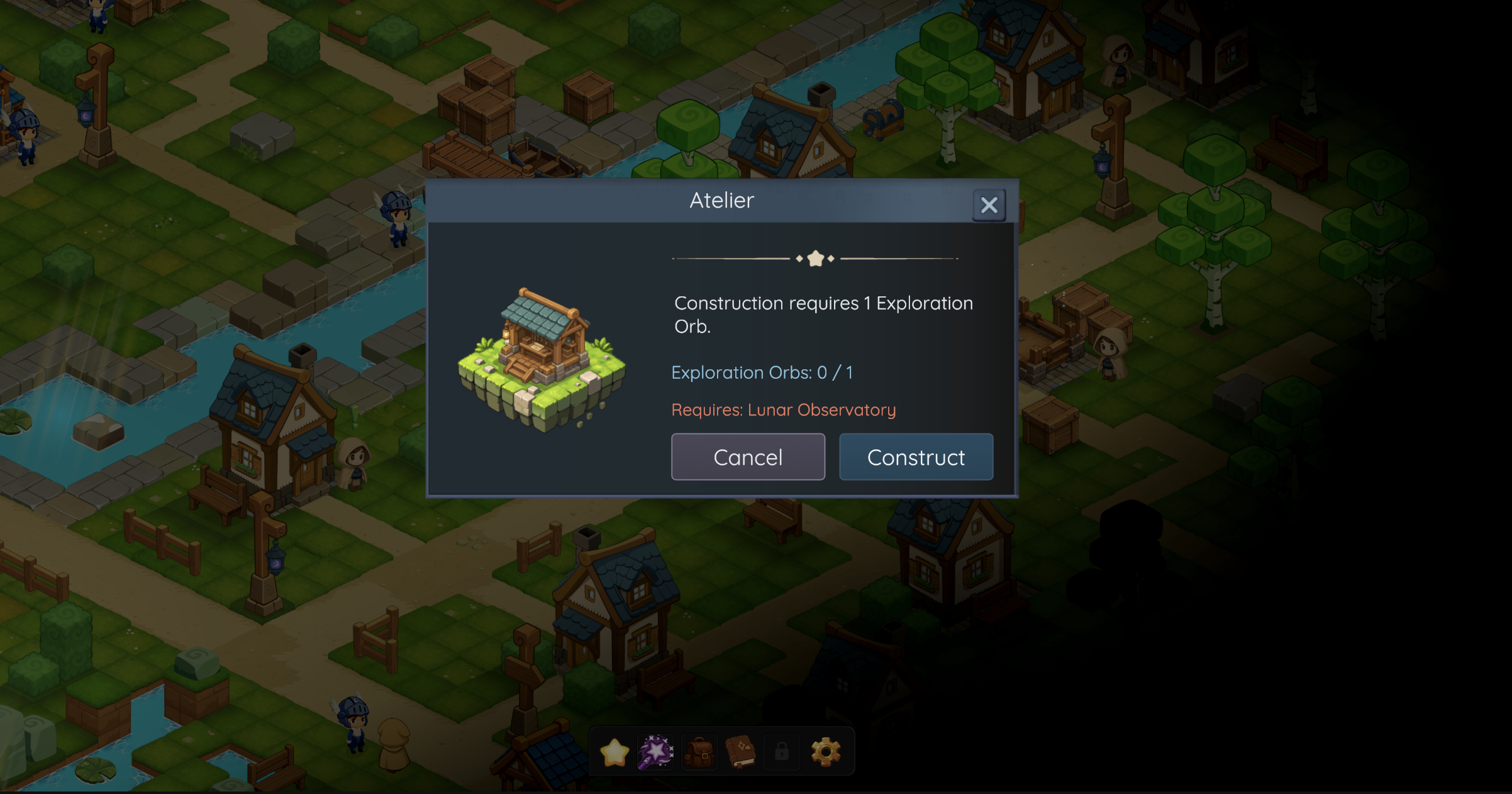
Many of Bran’s buildings will initially be under construction. Items and materials found while exploring will allow them to develop gradually. The town will grow alongside Orin’s progress, with upgrades giving the player new reasons to return. The observatory has a central role in this system, which I will present in a dedicated article.

I have also put together the economy that connects the shop, workshop and forge. My aim is for crafting items and upgrading equipment to be more worthwhile than simply selling the materials. The balance between exploration, rewards, buying, selling and crafting is still being tested. I want items found along the way to have several interesting uses, both for Orin and for the town’s development.

Luni’s Atelier construction panel, showing a workshop illustration and its requirements: one Exploration Orb and the Lunar Observatory. The orb counter reads 0/1. Cancel and Construct buttons appear below, while Bran’s blue-roofed houses, waterways and inhabitants remain visible behind the panel.
Building Bran’s workshop

Upcoming devblog topics

Almost all of the core systems are implemented and being tested. I’m continuing to refine the visual and audio elements while working on level design and building the game’s areas. Future devblog posts will look at these systems individually, with explanations and examples from the game.

We will gradually get to turn-based combat too, where there is quite a lot to discuss. The elemental system, battle mechanics and use of action points, special points and mana deserve a closer look. Some of these choices may seem a little unusual at first, so I will explain them through actual battle situations in future articles.

I’ll cover the Astral Plane in a later article. Orin discovers the power to cross into the other world a little further into the adventure. For now, this overview covers the beginning of his journey through the Forest of the Initiate and Bran.