Luni
Programming & Game Design

Game Design #3: Designing RPG map transitions in Luni

Designing the passages between maps in Luni, an isometric fantasy RPG, with glowing stones, signposts and a companion who shows the way.

By Andrei4 min read
Game Design #3: Designing RPG map transitions in Luni

In Luni, RPG map transitions are marked by glowing stones placed along the paths. Stepping onto one takes Orin to the next area, where the journey continues near the corresponding passage. It is a small part of this isometric fantasy RPG, but one the player will use throughout the adventure. I want those crossings to become familiar landmarks, with a clear place in the landscape and in the journey between regions.

A visual language for RPG map transitions

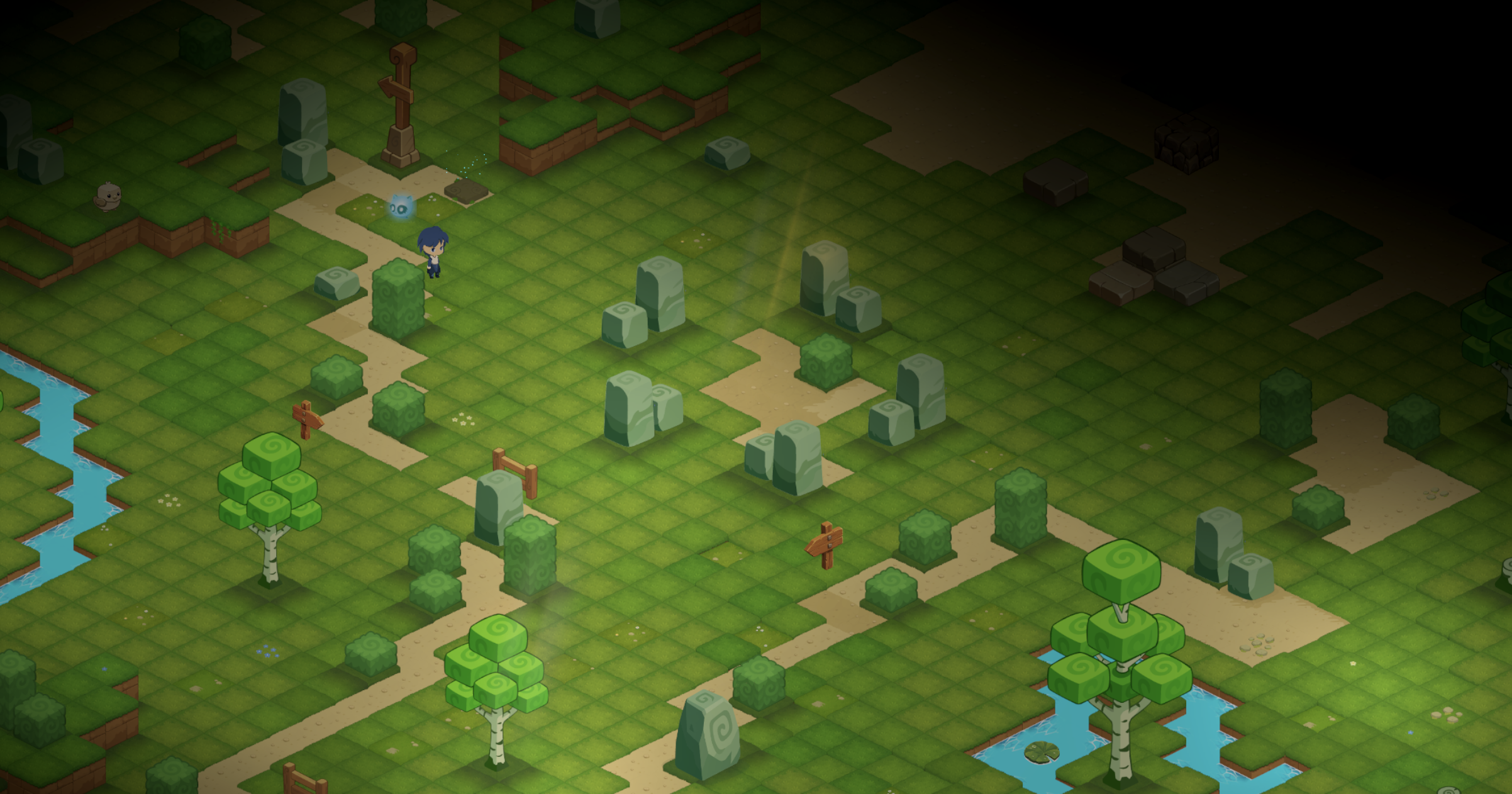
On the way to Bran, Orin travels through several parts of the forest. Each map contains its own paths, changes in height and encounters, while the route continues across their boundaries. A player following that route needs to recognise where it leads out of the current area. The exit therefore has a visible presence within the scenery: a stone on the ground, distinguished by its glow, with a path leading towards it.

The rule I want to maintain is that a signpost always points towards the exit. The signpost gives the direction, and the glowing stone marks the place to cross. Together, they provide two useful pieces of information at different moments of exploration. Orin can follow the indicated direction from further away, then recognise the passage when he approaches it. Repeating these cues helps establish a visual language that the player can learn and use again in another part of the world.
Learning the crossing with Cori’Nuca

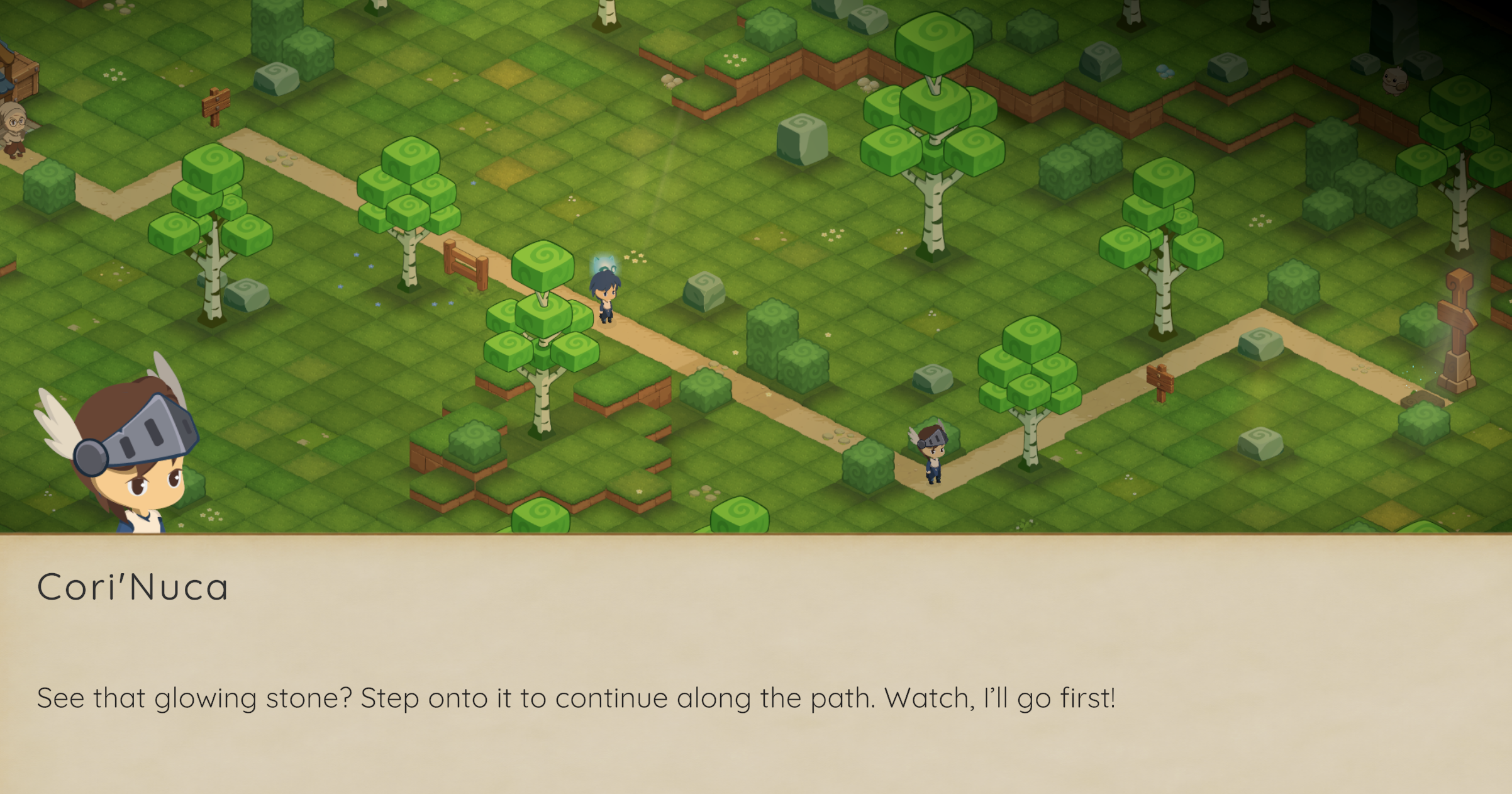
Cori’Nuca introduces the stones during the journey to Bran. As a companion who knows the way, he has a natural reason to point out the passage and explain what Orin should do next. His line is short and tied to something visible in the world:

See that glowing stone? Step onto it to continue along the path. Watch, I’ll go first!

The camera then follows Cori’Nuca as he walks to the stone. He steps onto it and disappears, showing the action that Orin will need to perform. Once control returns to the player, the same stone is still there, ready for Orin to follow. The explanation, the camera movement and the companion’s departure all introduce one interaction, with the demonstration giving the player a chance to see what stepping onto the stone means.

This moment also gives Cori’Nuca a practical role in the opening journey. He is taking Orin somewhere, and going ahead is part of that shared trip. I like being able to introduce an interaction through a character who has a reason to use it. The player learns about the world while watching something that belongs to the adventure itself. It is another use for the dialogue and cutscene tools presented in the previous devlog.

Cori’Nuca speaks to Orin on a forest path in Luni, with a sparkling passage stone and directional signpost visible ahead. His portrait appears beside a dialogue box reading: “See that glowing stone? Step onto it to continue along the path. Watch, I’ll go first!”
Cori'Nuca showing the way

Connecting the paths between regions

The arrival matters as much as the departure. Orin enters the next map near the corresponding passage, so the road has a recognisable continuation. That connection helps give the different maps a place in the same journey. After travelling further into the forest, a familiar stone can also help the player recognise the route back and relate a newly explored area to somewhere already visited.

These passages support the journeys created by Luni’s quests, too. A conversation in Bran can send Orin into the forest to look for someone, and the roads between maps become part of that search. The signposts and stones give the player consistent points of reference along the way. Their appearance can remain familiar while the surroundings, encounters and reasons for travelling change.

There is still plenty to discover along those roads. Knowing where the exit lies gives the player a point of reference while exploring the paths around it. My aim is for a glowing stone at the end of a route to become a familiar invitation to continue, with the curiosity of finding out what lies on the next map. Small details like these help me connect the individual places I’m building into the world of Luni.