Luni
Programming & Game Design

Game Design #2 — Designing quests for Luni

Designing quests for Luni, an isometric indie RPG, through personal stories, evolving dialogue and a quest journal that follows each stage of the adventure.

By Andrei4 min read
Game Design #2 — Designing quests for Luni

Designing quests for Luni starts with the people Orin meets. In this isometric indie RPG, a conversation can introduce a character, but it can also give Orin a reason to explore, look for someone or return to a place he has already visited. This connection between the inhabitants and the player’s journey is what I’m beginning to build with the first quests in Luni.

Small requests, personal stories

A quest can begin with a very simple concern. Someone in the village, for example, is looking for Yrdi feathers to make a pillow for the winter. That request connects a resource found during the adventure with a person who needs it. I like making room for these small stories alongside the important moments in the main plot. The inhabitants’ everyday concerns help me give the characters a personality and imagine their lives in this world.

Other encounters open up a longer story. In Bran, Mitzu'Lika is worried about her husband, Alandu, who has left for the forest. Orin can agree to look for him. This quest unfolds across several stages: an initial conversation leads to a search, and the player’s discoveries move the story forward. I’ll leave players to discover the rest of their story in the game. Other types of quests are also planned, including escort missions.
A quest journal that guides the player

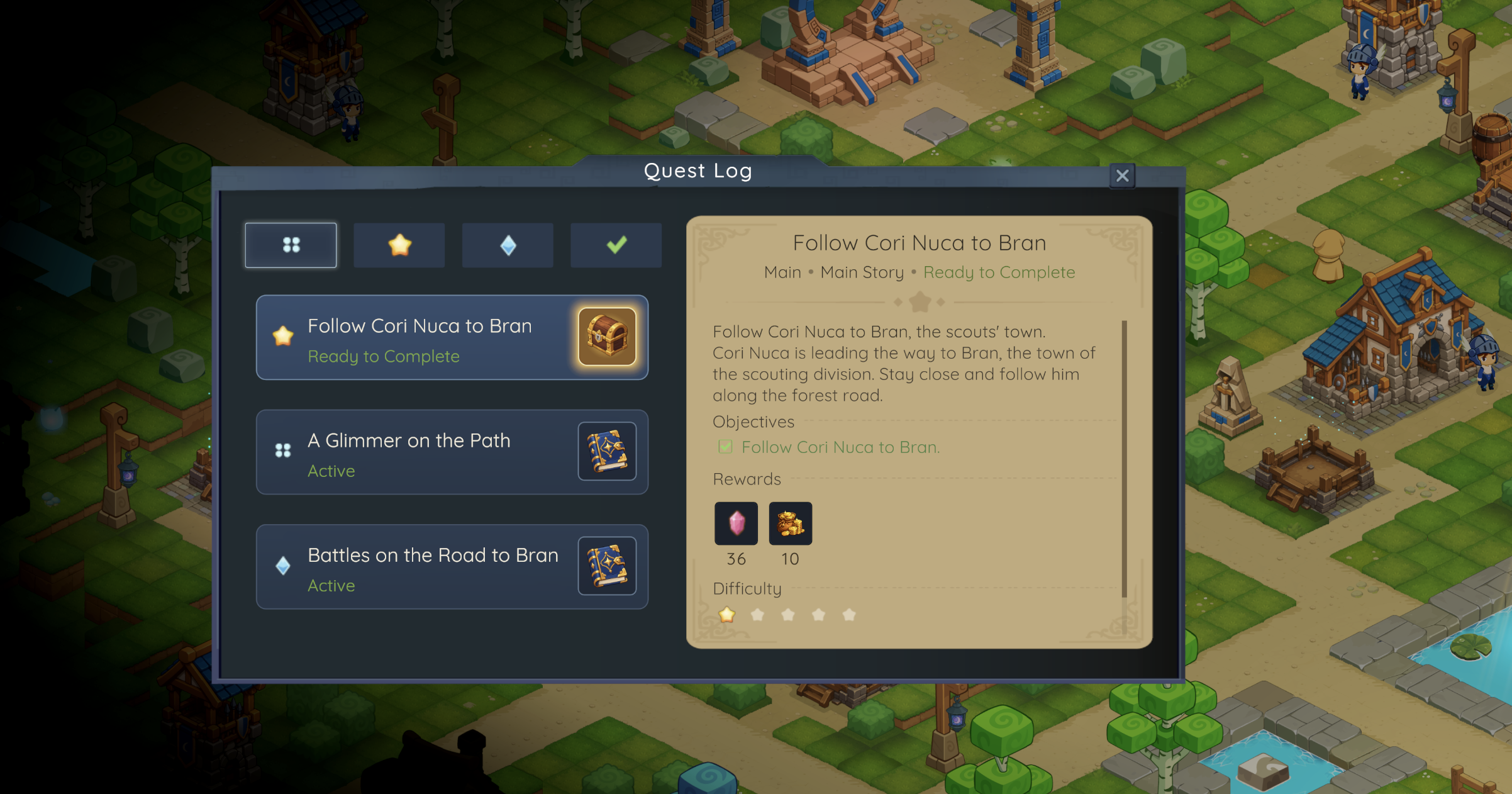
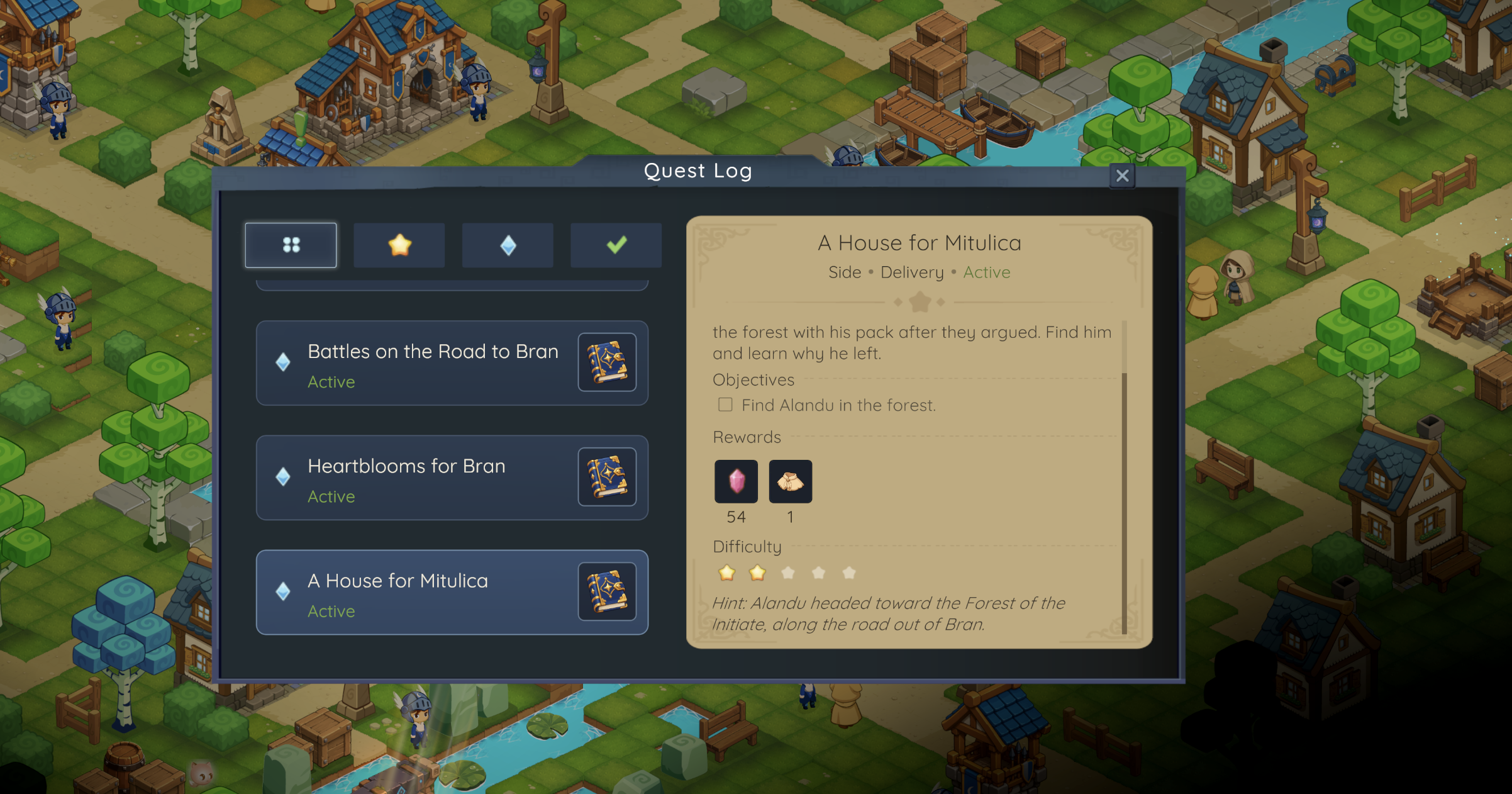
The quest journal brings these requests together, with their context, objectives, rewards and a hint when one is available. In the first quests with several stages, objectives are revealed gradually. The player can see what has already been done and what needs to happen next, while the rest unfolds through the encounters.

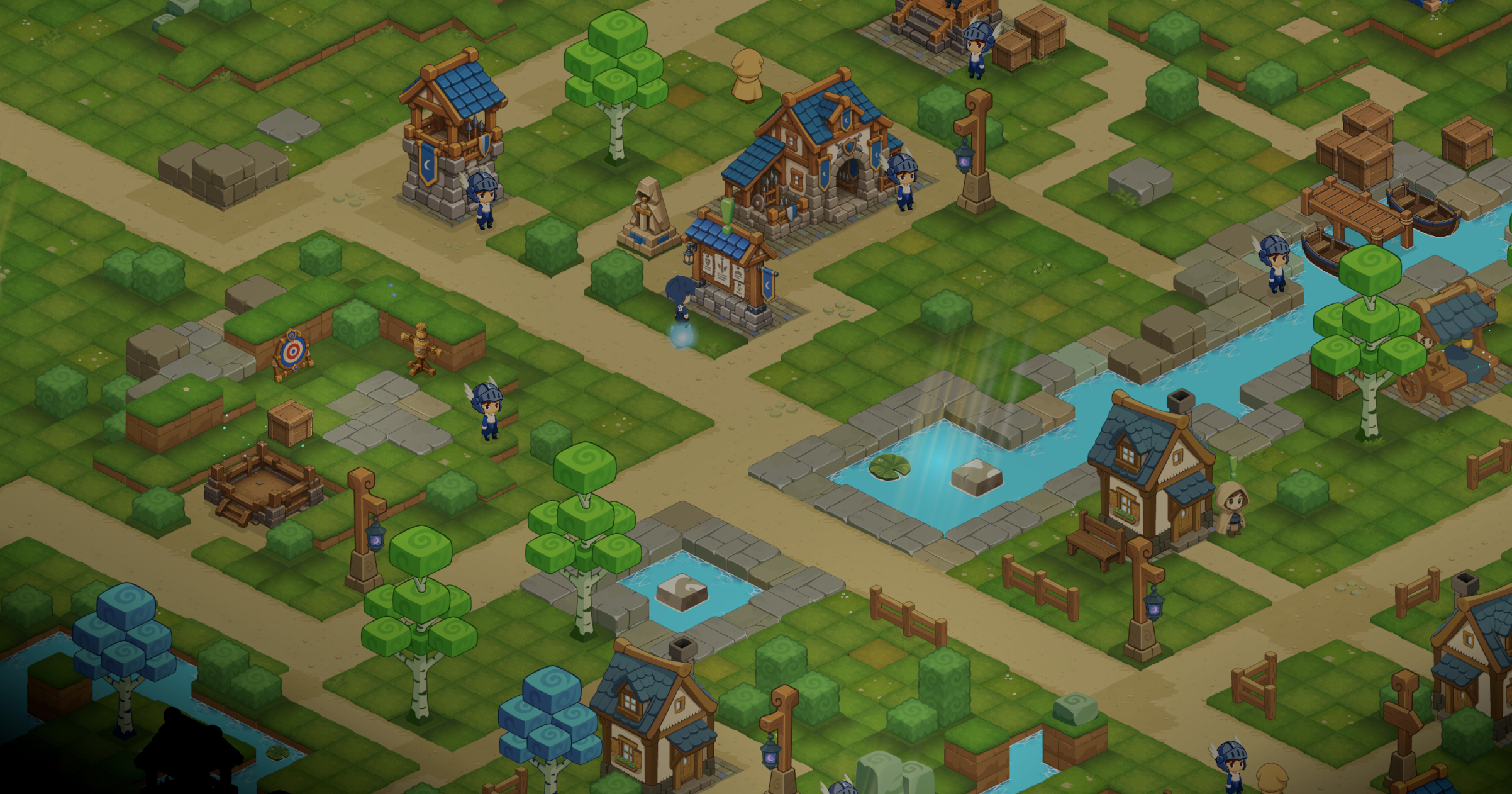
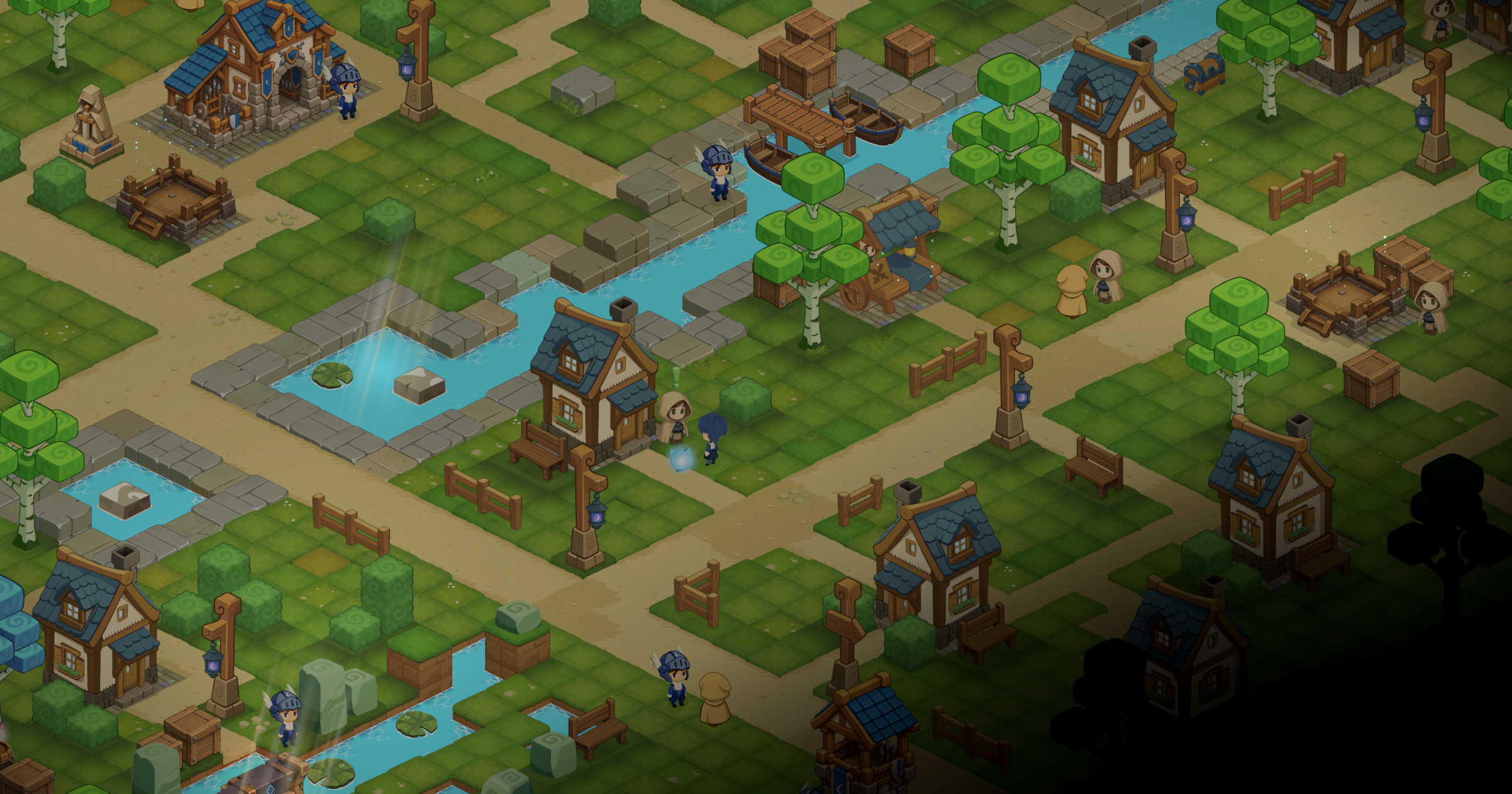
I’m still looking for the right balance between offering direction and leaving room for curiosity. The journal should make it easy to return to an adventure after a break, remember a request or find a character’s name. Markers above the characters add a visual cue when a quest is available or the next step involves talking to them.

Luni’s quest log shows the search for Alandu, with an unchecked objective, rewards and a hint pointing towards the Forest of the Initiate.
The journal brings together the current objective and a hint about where to look.

How dialogue changes with quest progress

The characters’ dialogue takes quest progress into account. Someone can ask for a favour during a first meeting, remind Orin what they need while the quest is underway, then react to what has been accomplished. In a story with several stages, the same person can also have something new to say after a discovery. Returning to them becomes part of the story.

Quests can also change which characters are present in a location. This links events across different places: something that happens in the forest can affect a later meeting in Bran. It gives me a foundation for stories that continue beyond their opening conversation, with each stage shaping the next encounter.

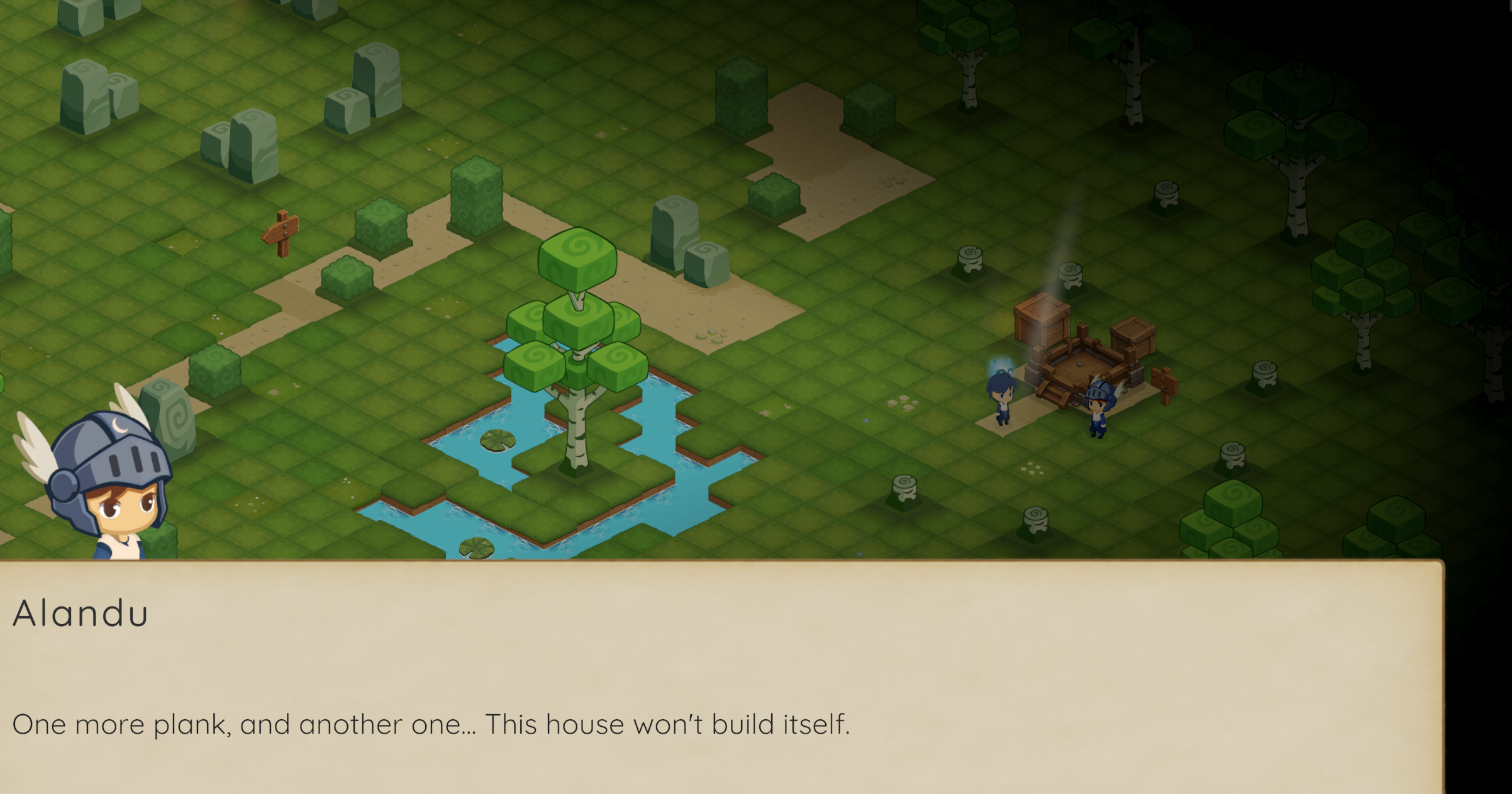
Orin meets Alandu beside a construction site in the forest. His dialogue reads: ‘One more plank, and another one... This house won’t build itself.’
Finding Alandu leads Orin to a building site in the forest.

Building quests in Luni

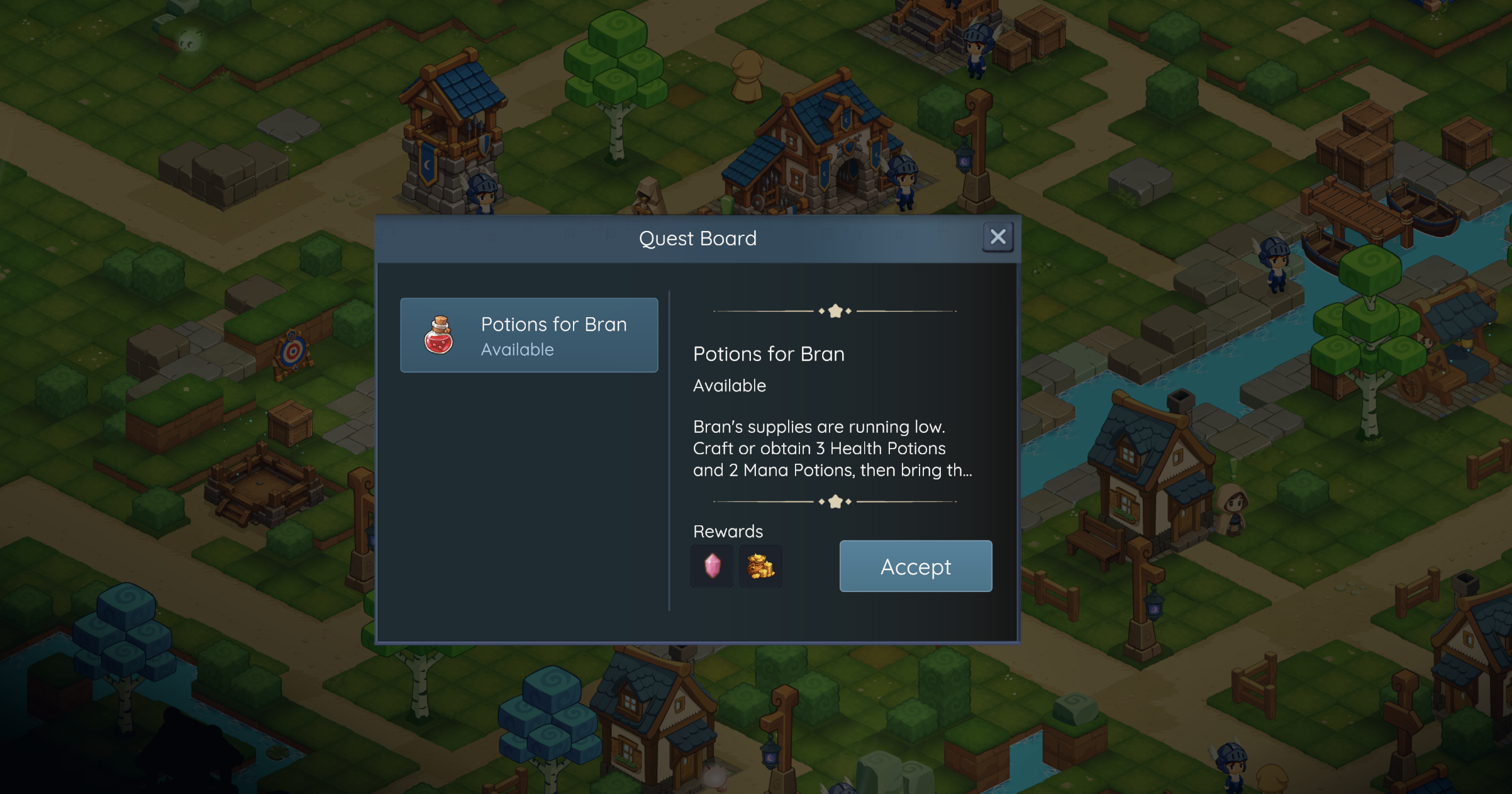
Bran’s quest board offers another way to find quests. Once accepted, these missions join the same journal as those received directly from the inhabitants. The different starting points let me vary how the player discovers a quest while keeping a shared way to follow its progress. A conversation in the forest and an offer found in town can each lead Orin towards a different part of the world.

To build these first quests, I’ve brought together dialogue, objectives, travel between locations, inventory, rewards and saving. This foundation lets me spend more time on the situations and characters: why someone asks for help, what Orin discovers along the way and what that meeting adds to Luni’s world. It is another use for the reusable pieces introduced in the previous devlog on dialogue and cutscenes. As I build more of the adventure, I want these connections to give players reasons to remember the people they meet and return to them.

Luni’s quest log shows ‘Follow Cori Nuca to Bran’ ready to complete, with a checked objective, a glowing chest icon and rewards.
The objective is checked off, and the quest is ready to complete.
Orin and his glowing blue wisp stand beside Bran’s quest board, marked with a green exclamation mark, among blue-roofed buildings and waterways.
Bran’s quest board gives the town’s inhabitants another way to ask for help.
Luni’s quest board shows ‘Potions for Bran’, an available request for three health potions and two mana potions, with reward icons and an Accept button.
The board offers requests such as supplying Bran with potions.