Luni
Programming & Game Design

Engineering #2: Building Dialogue and Cutscenes in Luni

Building reusable tools to stage characters, write their conversations and connect these encounters to the game’s other systems.

By Andrei Alexandru4 min read
Engineering #2: Building Dialogue and Cutscenes in Luni

In Engineering #1, I explored movement and depth in Luni’s isometric world. This time, I want to share the tools behind its dialogue and cutscenes: speaking, moving during a scene, offering a quest or responding to an encounter.

To prepare these moments, I built tools in Unity that let me assemble dialogue and cutscenes from reusable pieces. A meeting between companions, a meal at Tziba’s and a conversation with the Granite Gate can all draw on the same foundations.
Giving each speaker an identity

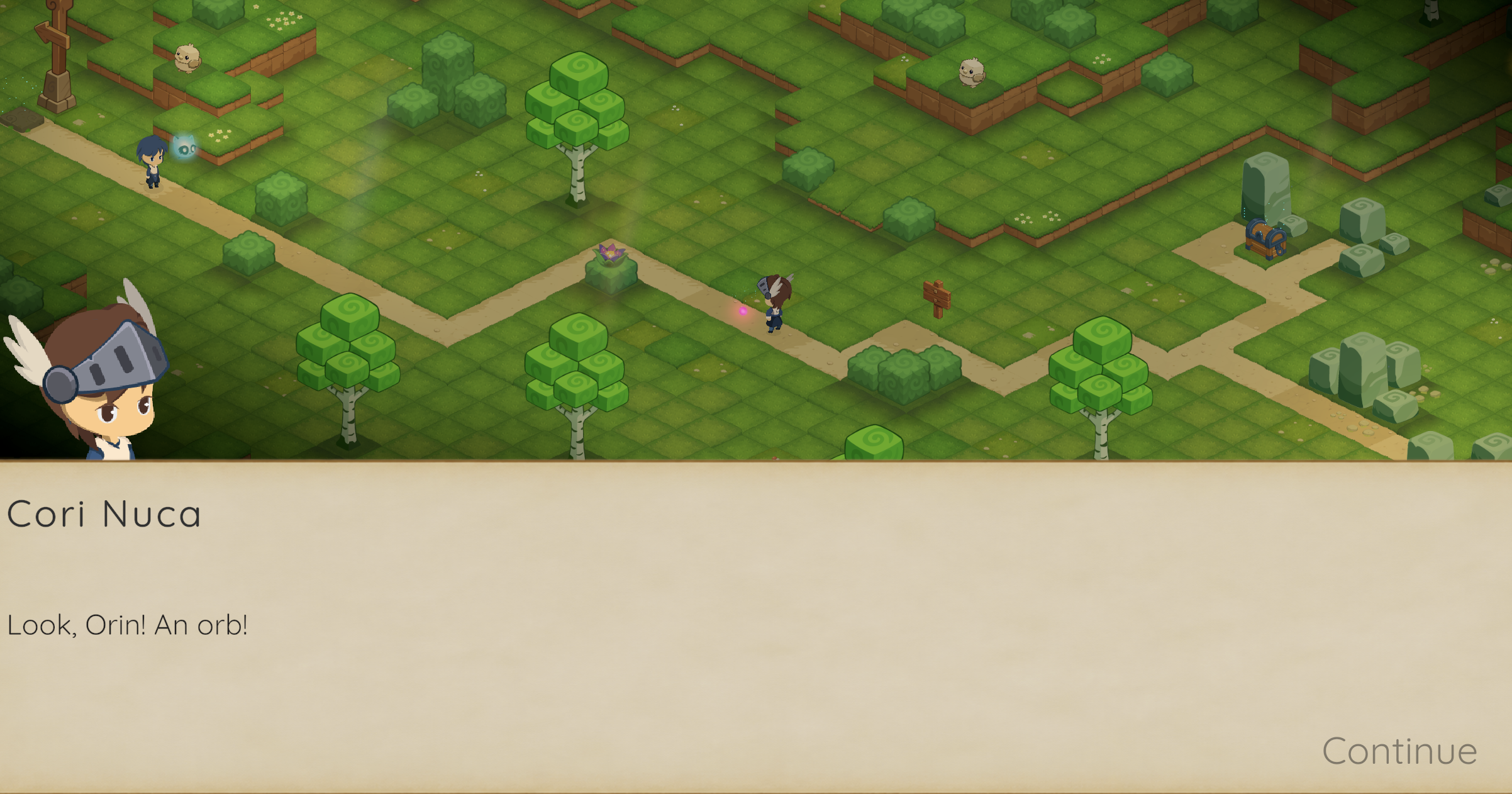
For each speaker, I gather the useful information in a kind of character sheet: their displayed name, portrait and the little sounds that can accompany their lines. Conversations then use that information to present the person speaking. The same character can appear in several exchanges, and I can adjust their presentation through that shared sheet. A speaker might be one of Orin’s companions, a resident of Bran or even part of the scenery. That is what allows a cave entrance to have its own portrait and address the player.

Orin and Cori’Nuca during a conversation in Luni, with the speaker’s portrait and name.
A character keeps their name and portrait across the conversations they take part in.

Building a cutscene step by step

A scene takes shape by putting steps together. To prepare an encounter, I can, for example:

  1. Bring a character into the scene.

  2. Move them towards Orin.

  3. Turn them to face him.

  4. Adjust the camera.

  5. Start their conversation.

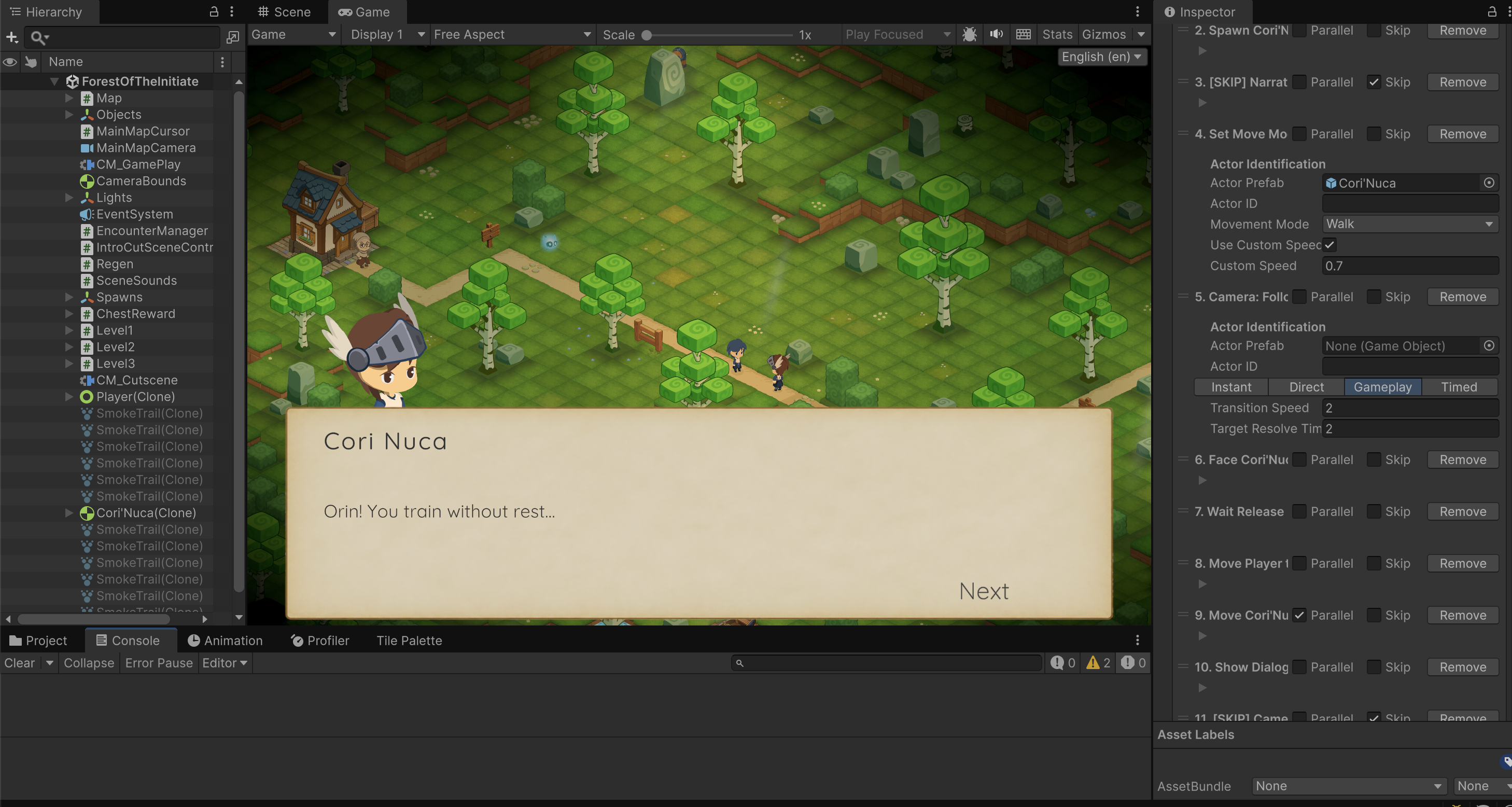
The tool lets me add these steps, change their order and set the information for each one. I can also add a pause or wait for movement or dialogue to finish before continuing. Characters use the world’s movement rules, with its paths and obstacles. This connects the scenes to the systems presented in the first article.

Each cutscene still needs its own rhythm. A character’s arrival, the start of a line and the camera movement need to work together. Reusable actions let me work on that staging without rebuilding how it functions for every encounter.

Luni’s forest scene beside the list of cutscene steps in Unity.
A scene is built by assembling steps: moving characters, directing the camera and starting dialogue.

Connecting dialogue and cutscenes to gameplay

To write a conversation, I choose who is speaking, what they say and the responses available to the player. Those responses can continue the exchange, end it or accept an offer. The same dialogue panel serves exploration and cutscenes. The context then determines what the conversation brings to the game.

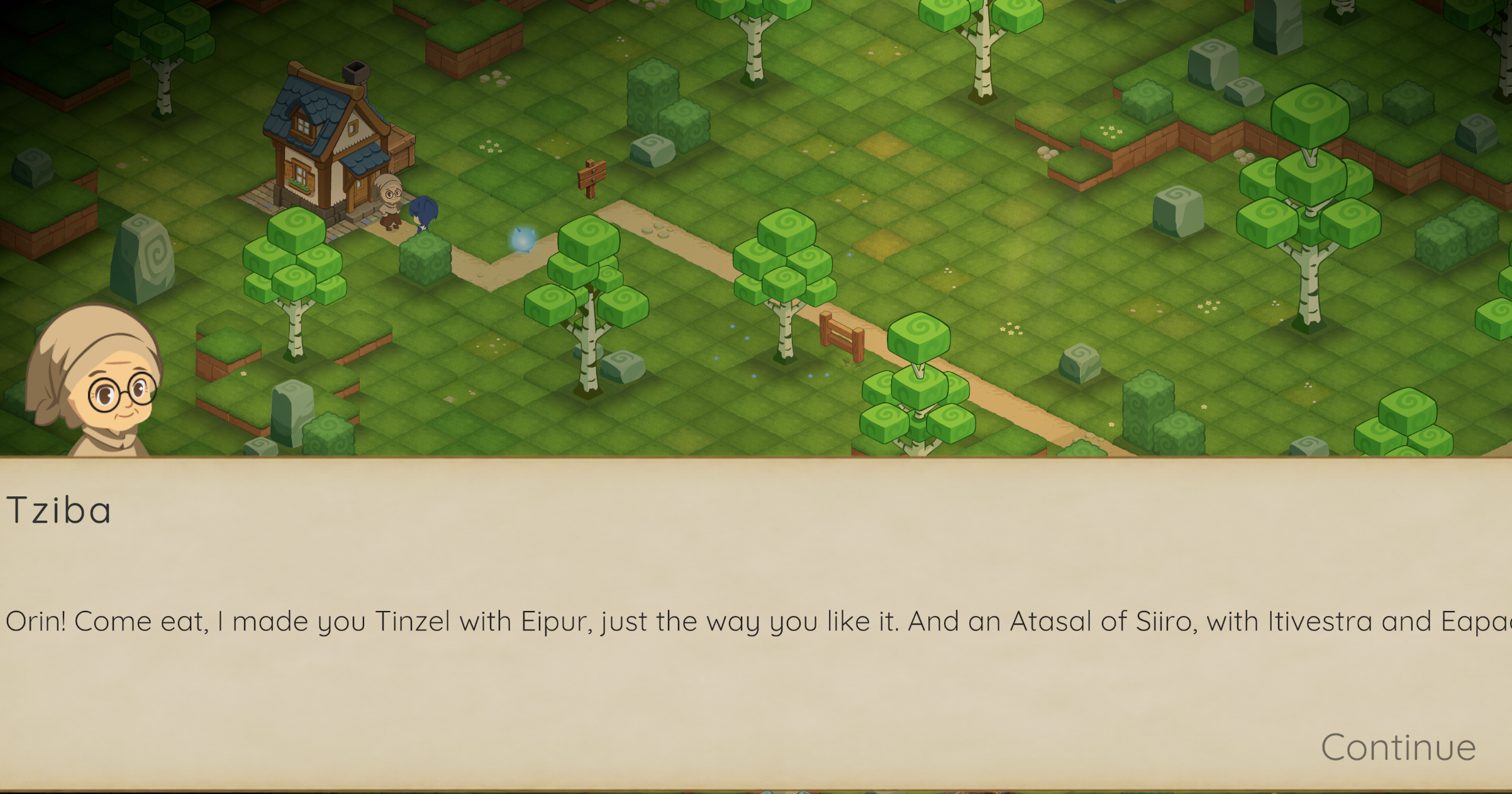
At Tziba’s, Orin’s grandmother, accepting a meal restores the party’s health and mana. This small encounter connects dialogue to the characters’ resources. A conversation with Mitulica can offer a quest, remind the player what is needed and then let them hand over the requested items. Here, dialogue works with quests, inventory and rewards. These examples give the same tools different uses while keeping a familiar presentation for the player.

Orin speaking with Tziba in Luni, with her portrait and offer of a meal.
Accepting Tziba’s meal restores the party’s health and mana.

A cave entrance with something to say

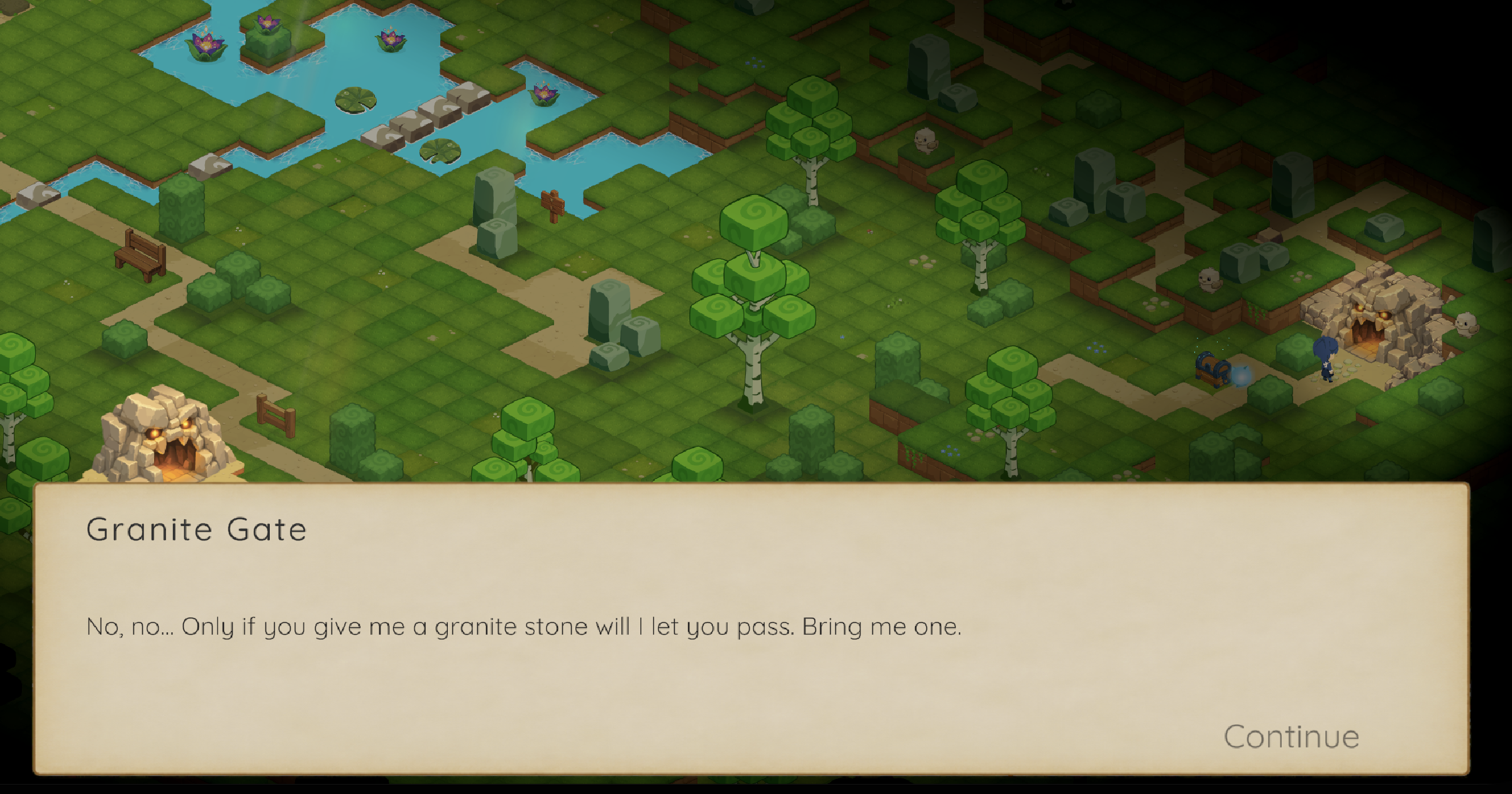
The Granite Gate is a cave entrance that speaks to Orin. It has its own name, portrait and request: a granite stone in exchange for passage. The player can accept or refuse. If they accept and have the requested item, the exchange opens access to the cave. That opening is preserved with the player’s progress when they save the game. The gate is a concrete example of an encounter built with several systems: dialogue presents the request, inventory supplies the item and progression keeps track of the open passage.

Orin speaks with the Granite Gate, a cave entrance asking for a granite stone in exchange for passage.
A cave entrance can become a speaker too.

Bringing the systems together

This work connects several systems already present in Luni: movement and obstacles in the isometric world, characters and their dialogue, cutscenes, quests, inventory, the party’s health and mana, and saved progress. These tools let me compose different encounters: move a character during a scene, accept a quest, recover at Tziba’s or open a cave passage. Each encounter uses the pieces it needs. It is this system of assembling pieces that now lets me build a coherent world for Luni.