Luni
Programming & Game Design

Game Design #5: Bran’s Shop and Luni’s Economy

Bran’s shop opens beside Orin’s inventory. Buying, selling, crafting and equipment upgrades connect his adventures to Luni’s RPG economy.

By Andrei4 min read
Game Design #5: Bran’s Shop and Luni’s Economy

When Orin returns from exploring around Bran, the shop is where he can turn his finds into gold and prepare for the next trip. The shop, workshop and forge together form the core of Luni’s RPG economy.

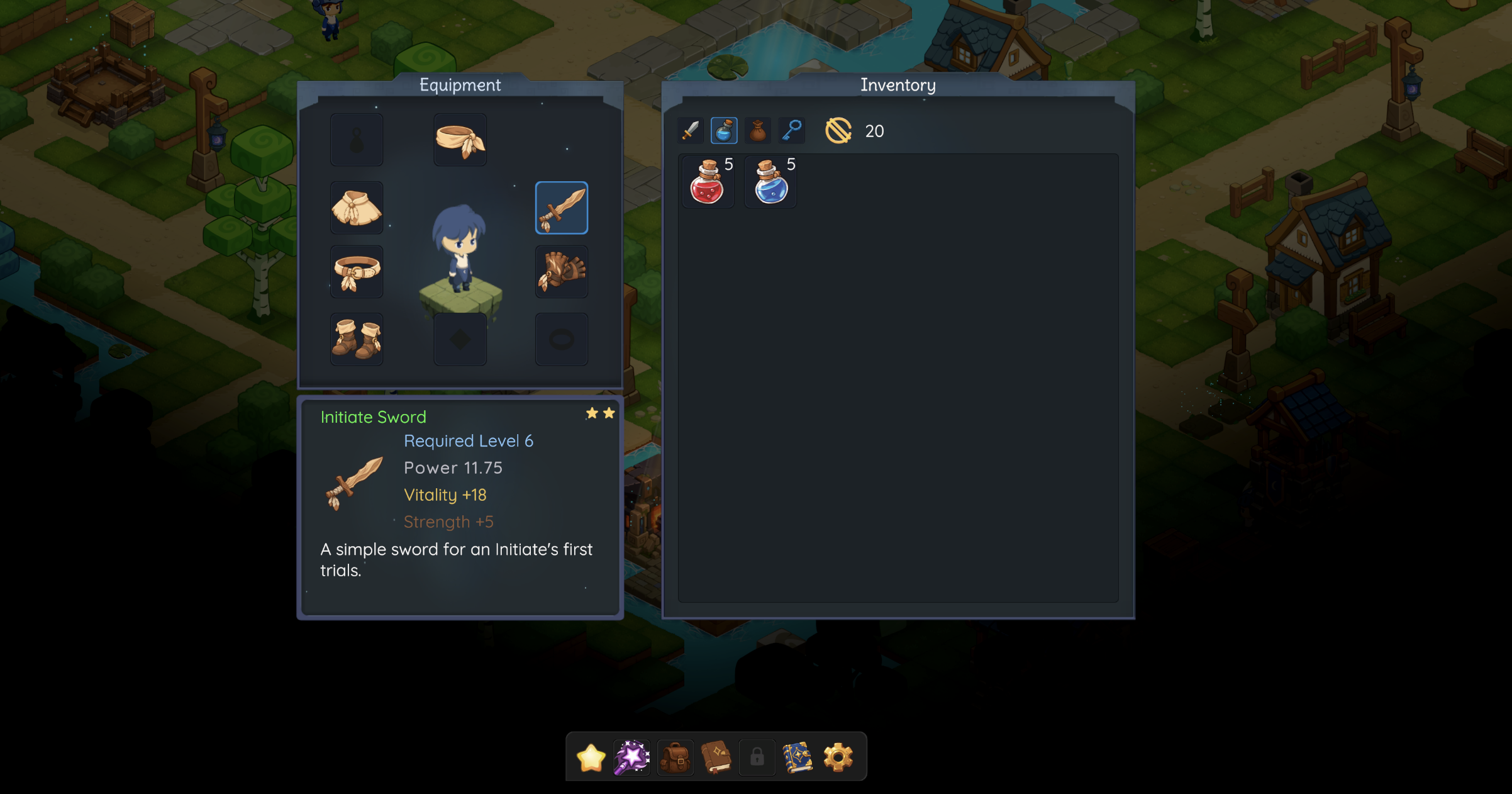
The cover shows Orin’s Equipment and Inventory panels. In the Equipment panel, selecting his equipped sword brings up its stats. The Inventory panel alongside it shows the potions he’s carrying.

Shop and inventory side by side

When you visit the merchant, the shop opens on the left and Orin’s inventory and gold balance appear on the right. Both panels have tabs for equipment, consumables, resources and keys.

Having the inventory open comes in handy when you stop in for supplies. You can see how many health and mana potions you have left and decide what to bring on the next trip. If you’re short on gold for a purchase, you can check what materials you can spare while you’re still in the shop.
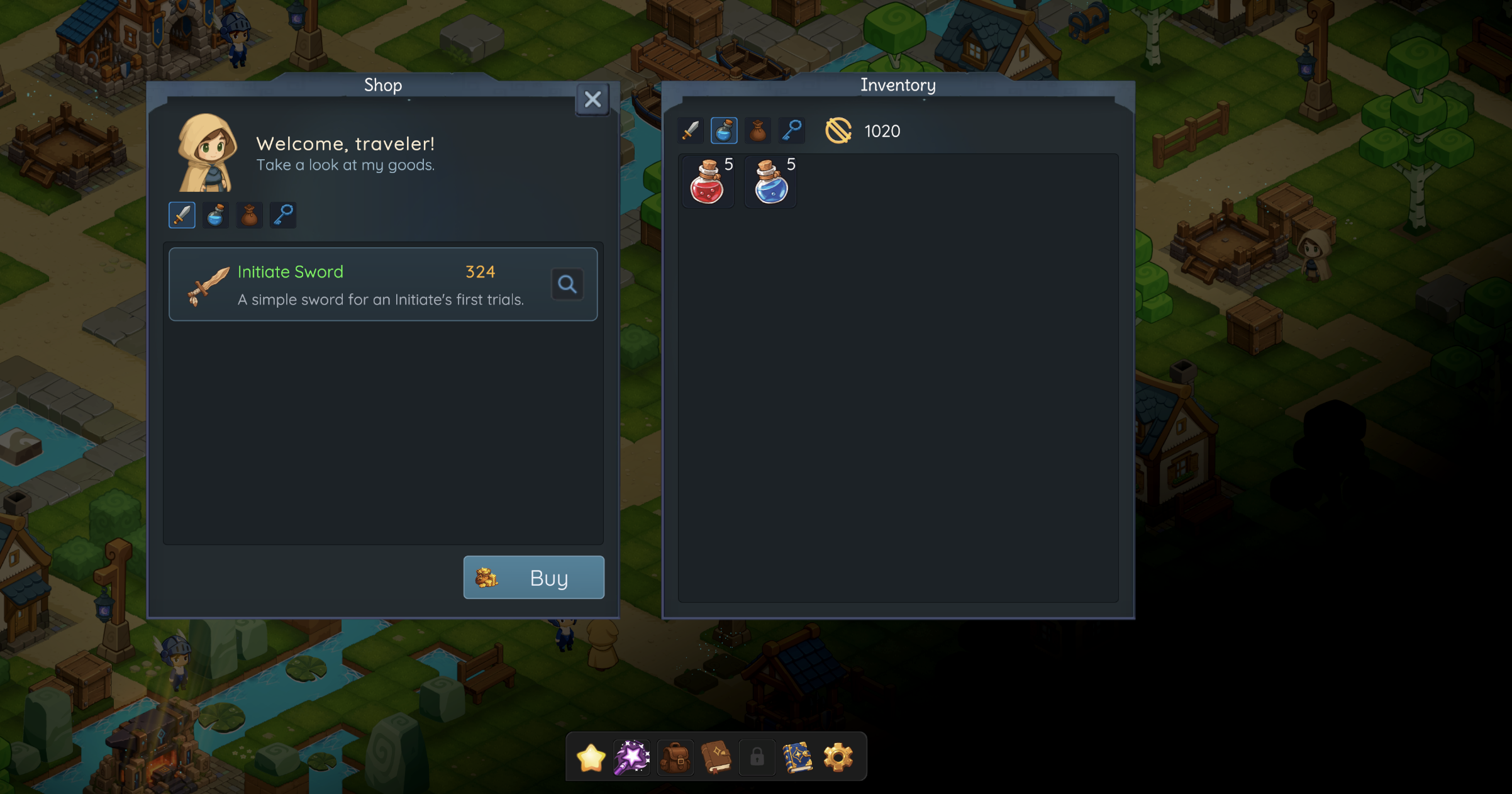
The Initiate Sword is listed for 324 gold in Bran’s shop, alongside Orin’s inventory with two stacks of potions.
Bran’s shop opens beside Orin’s inventory.

Inspecting equipment before buying

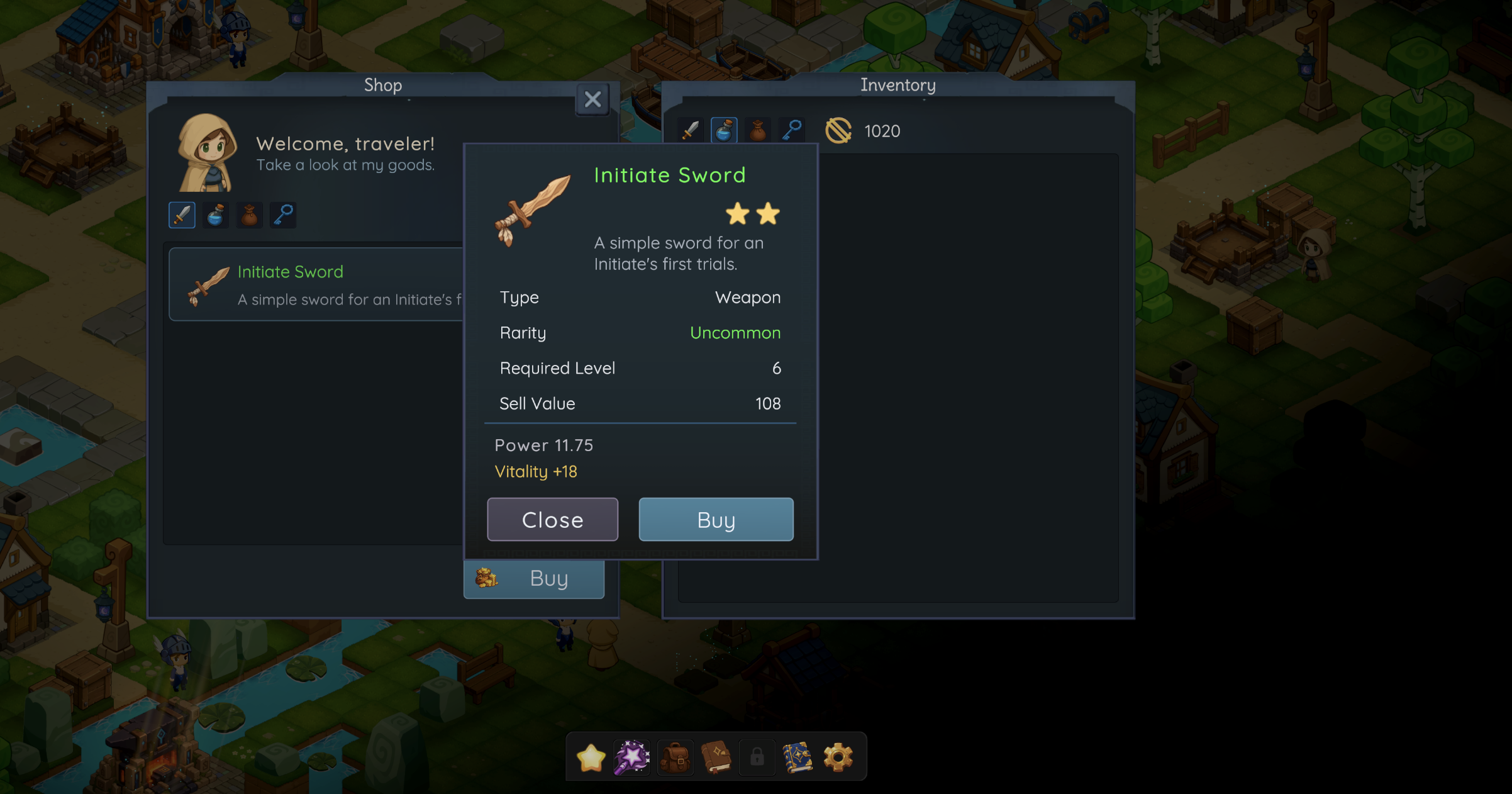
You can inspect an item before buying it in Bran. The Buy window below shows the Initiate Sword’s rarity, required level, weapon power, bonuses and resale value.

The required level tells you when Orin can use the sword. Its bonuses help you decide if it suits your build. If you want Orin to have more health, for example, the sword’s Vitality bonus might matter as much to you as its weapon power. Once Orin equips the sword, the bonus is reflected in his total attributes.

The shop’s Buy window shows the Initiate Sword’s rarity, required level, stats and resale value.
Inspecting an Initiate Sword before buying it.

Crafting and upgrades in Luni’s RPG economy

Monsters in Luni leave behind loot but don’t drop gold. Selling their drops and the resources you find while exploring is one way to earn gold. You can sell a surplus straight away, set aside what you need for a quest, or bring ingredients to the workshop. A crafted item sells for more than its ingredients would separately.

Suppose you bring back enough materials to make a piece of equipment. Selling the materials can cover an immediate purchase. Crafting gives you something you can equip now and sell later, once you find a replacement. You can also upgrade it at the forge to improve its stats and raise its resale value.

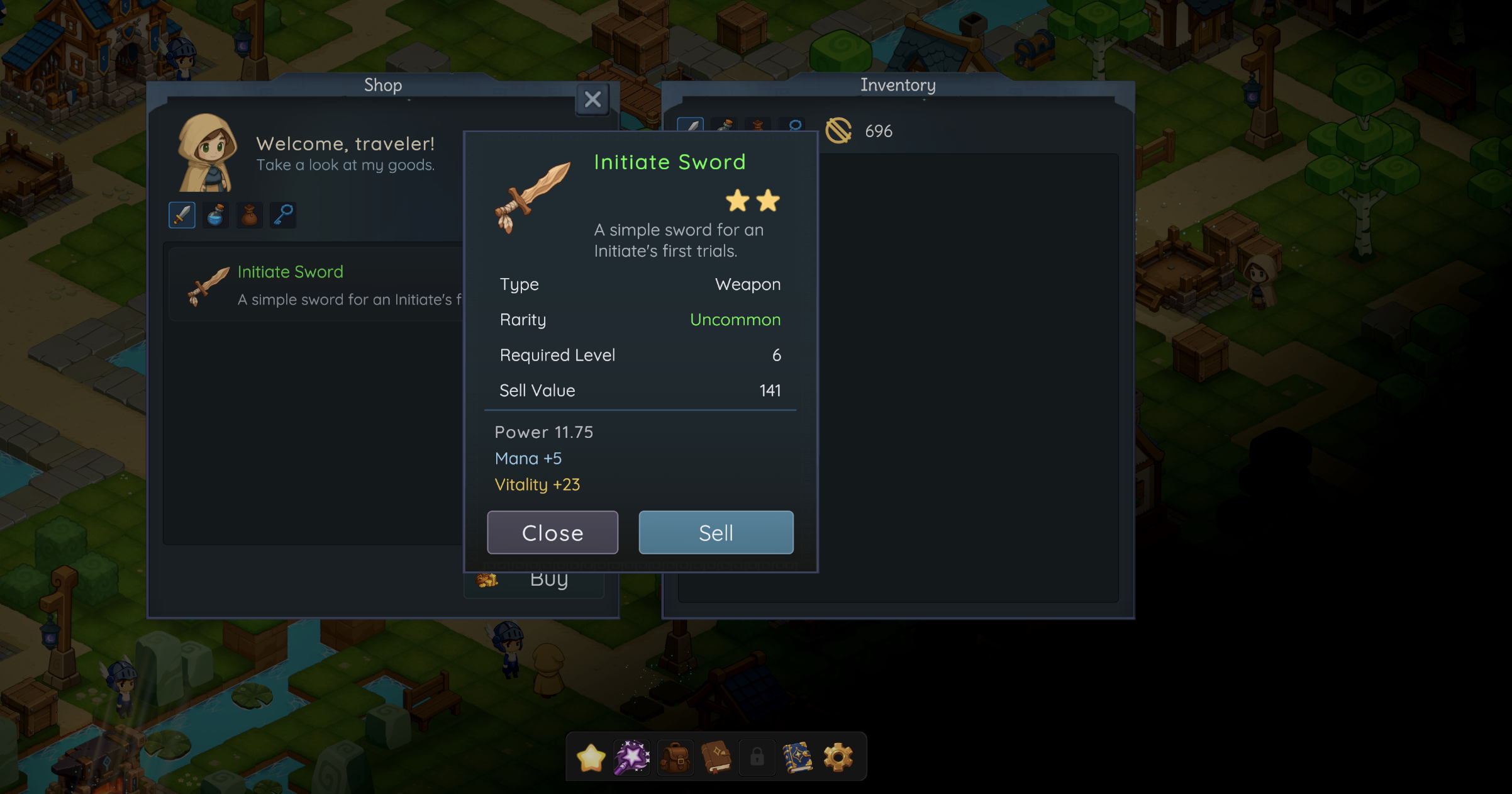
The Sell window below shows the stats and resale value of the item you’re selling. This upgraded Initiate Sword has different bonuses and a higher resale value than the starting version in the Buy window. Even though both swords are Uncommon, the work you put into an item at the forge can still increase what the merchant will pay for it.

The shop’s Sell window shows an upgraded Initiate Sword with mana and vitality bonuses and a resale value of 141 gold.
An upgraded Initiate Sword has a higher resale value.

Ores and the role of Bran’s shop

Bran’s merchant is the main source of ore for crafting. You can buy copper early on, and iron becomes available as you upgrade the shop. Ore may also turn up as a rare find while exploring. For a regular supply, the merchant carries limited quantities that replenish over time.

That makes a trip back to Bran part of planning a recipe. You might already have some ingredients from your last outing and only need to buy the ore. The gold you earned from selling spare materials can go toward those missing ingredients.

A shop that grows with Bran

Upgrading Bran’s shop expands what the merchant can offer. I’m considering a few items that would be exclusive to shops, alongside others you could buy, craft or find during the adventure.

Sometimes selling what Orin brings back pays for something he needs right away. Other times, those materials are worth keeping for the next recipe or forge upgrade. I use formulas to set shop prices and calculate how much crafting and forge upgrades add to an item’s resale value. I’m still testing those formulas alongside stock limits and restock times to see how they affect the pace of progression.